Blog

Uncategorized

Is a cesarean birth the only option if my baby is breech?

Excerpt from Asking for a Pregnant Friend: 101 Answers to Questions Women Are Too Embarrassed to Ask about Pregnancy, Childbirth, and Motherhood

No, you have numerous options. But before we dive into those, know that it’s common for babies to turn out of breech position up to week thirty-six of gestation. It’s certainly still possible after that, but it’s less likely, as baby is getting bigger, leaving less room for the turn.

If you are nearing week thirty-six of gestation and are feeling nervous about baby turning, the first step in encouraging them to turn is using the gentle turn techniques outlined in the “What to do” section below. From there, I discuss a more intense turning technique, called external cephalic version (ECV), and then help you explore what it would look like to vaginally deliver a breech baby. And finally, we’ll look at the process of coming to terms with a cesarean birth, if that ends up being the best path for you.

What to do

Try the following techniques, after getting the go-ahead from your care provider:

Gentle turning methods: If you’re past thirty-four weeks gestation, you can try natural techniques for turning baby into the vertex (head-down) position. Many of these methods are based on the belief that if your uterus is relaxed and your pelvis is optimally positioned, there’s more space for baby to get into the ideal position. And because their head is the heaviest part of their body, gravity helps them rotate if there’s room. These natural techniques are listed in the sidebar below.

Gentle Breech Turning Methods

Guided meditation: I’ve created a recording to support you in relaxing your uterus while envisioning baby turning into the ideal position; you can download it at the following link: yourserenelife.wordpress.com/breech-baby/. Beyond focusing on the physical act of creating more room in the uterus through relaxation, the essence of this meditation is to energetically connect with your baby and encourage them to turn. This is a helpful track to listen to as you engage in the following baby-turning techniques.

Moxibustion: In this exercise, a witch rubs eye of the newt, unicorn poop, and breast milk on your belly. Just kidding. But the real thing might seem a little out there. Derived from Chinese medicine, moxibustion consists of a licensed acupuncturist burning mugwort close to each of your pinky toes (the Bladder 67 acupuncture point). The idea is that the stimulation of heat by these points encourages the release of estrogen and prostaglandins, which in turn stimulate mild contractions that encourage the baby to turn, without causing preterm labor. Moxibustion is usually most effective when used in conjunction with acupuncture and positions used to turn a breech baby (after you receive the moxibustion).

Acupuncture: In addition to moxibustion, an acupuncturist can apply needles to points that will promote relaxation in your uterus and create an overall sense of calm.

Child’s pose: Encourage your baby’s feet or bum to lift out of your pelvis and flip to the upper portion of your uterus by settling into child’s pose. To do this, kneel on a soft, stable surface with your toes together, and knees hip-width apart. Then, lean forward and settle your forearms on the surface in front of your knees, and rest your head on your hands. From here, focus on getting your butt into the air. If you become light-headed or uncomfortable, ease out of the position.

On-all-fours belly dancing: Give baby gentle encouragement to make the turn by getting on your hands and knees on a soft surface (e.g., your bed or pillows on the floor) and gyrating your hips like you were belly dancing. You can make this less boring by popping on a show or music that makes you want to gyrate. And be forewarned that this hands-and-knees-hip-swirl has been known to make baby-making partners randy.

Pelvic tilt: Get back on that soft surface, lie on your back with your knees bent and feet planted on the floor, then lift your hips into the air. This is the bridge pose used in yoga. But we’re going to make it easier by having a friend or family member stack pillows under your hips until you’re able to rest in this position. Hang out here for ten to twenty minutes, listen to the guided meditation I keep touting, and repeat the process at least once a day.

The Webster technique: Performed by a chiropractor, this technique helps realign the pelvis to provide more room for baby to get into the vertex position. Ask your care provider for a referral for a local chiropractor skilled in this technique.

Music: While this is based on an old wives’ tale, it’s worth a try. Grab a portable speaker or some ear buds, turn on a funky jam, and place the speaker against your pelvis. The idea is that baby will be curious about the music and turn their head toward the speaker to investigate. At the very least, this provides an opportunity to develop baby’s good taste in music.

Spinning Babies Aware practice: Check out the following link to see if there is a Spinning Babies practitioner in your area: spinningbabies.com/spinning-babies-aware-practitioner -directory/. The Spinning Babies organization trains medical care providers and bodyworkers to help pregnant women utilize many of the techniques mentioned above. A practitioner can also guide you through a series of helpful daily activities, found here: spinningbabies.com/start/in-pregnancy /daily-activities/. In addition, you can take a class with a Spinning Babies Parents Educator, who you can find here: spinningbabies.com/spinning-babies-certified-parent -educator-directory/.

ECV: If you’re not able to turn baby with gentler techniques by week thirty-six or thirty-seven of gestation, ask your care provider if you’re a candidate for an ECV. In this not-too-fun-but-sometimes-effective technique, a trained practitioner will press on the outside of your abdomen, trying to turn baby’s head down. It usually takes just a few minutes, but it doesn’t always work.

Factors that increase your chance of a successful ECV include having given birth before and the care provider being able to easily feel baby’s head. Reasons you wouldn’t be able to have an ECV include placenta abruption, severe preeclampsia, or signs of fetal distress. In addition, some care providers won’t perform an ECV if you have low amniotic fluid levels or the cord is wrapped around baby’s neck.

While ECV is usually an uncomfortable procedure, it’s worth a try, as it has fairly good success rates. A study published in Obstetric Anesthesia Digest reported that 33 percent of first-time mothers and 61 percent of mothers who have given birth before will have a successful ECV. And there are ways to potentially increase those success rates. An article published in the Cochrane Database of Systematic Reviews reported that the following treatments may improve the outcome of an ECV, but that further research is recommended.

  • Relaxing the womb with drugs like beta stimulants and calcium channel blockers
  • Stimulating the baby with sound through the mother’s abdomen (see “Music” above)
  • Increasing the fluid surrounding the baby
  • Injecting an epidural or spinal analgesia to promote relaxation
  • Giving the mother opioid drugs to help her relax
  • Using guided meditation, which you might have heard about once or twice in this book

Breech delivery: If the ECV doesn’t work, you can start the search for a doctor who attends breech births. While these doctors do exist, they’re becoming harder to find, as many medical schools no longer teach doctors how to deliver a breech baby. Your best bet is to contact a university hospital and ask if they have care providers who support vaginal delivery of breech babies. You may need to contact numerous hospitals before finding someone. And sadly, the search may reveal that no one in your area attends breech deliveries. If you want to discuss breech deliveries with a doctor famous for his work in this area of obstetrics, and possibly receive a referral, reach out to Stuart Fischbein, MD, OB-GYN, through birthinginstincts.com.

If you find a doctor with the expertise and willingness to attend a breech birth, have a conversation with them about the risks and how they would support you through worst-case scenarios. After reviewing your medical records, they can also tell you whether you’re a good candidate for a breech birth. Circumstances that could make you a good candidate include the following:

  • You’ve given birth vaginally to one or more babies who were around the same size as the baby now in utero.
  • Your baby is in frank breech position, which means their butt is down, instead of feet first. It’s also ideal if their head is angled forward, chin to chest.
  • You don’t go into labor before week thirty-seven of gestation. Coming to terms with a C-section: With all that said, you might find that a C-section is the option you feel most comfortable with, and there is nothing wrong with that. Not feeling determined to have a vaginal breech delivery does not mean you’re “giving up”; it just means you’re following the path that feels intuitively right for you. And that path is different for each woman.

Part of your unique experience might also include disappointment over not having the vaginal birth you’d hoped for. You can feel frustrated by the turn of events, while still trusting that you’re having the birth you’re meant to have.

Get your copy today.

birth podcast, Childbirth, Pregnancy, pregnancy podcast

Why Birth Is Often More Dangerous For Black Women

https://www.podbean.com/media/share/pb-43yd3-11c483b

Insight into why Black women in the United States are four times as likely to die during pregnancy, childbirth, or in the first year after birth than white women, and what can be done to change that. 


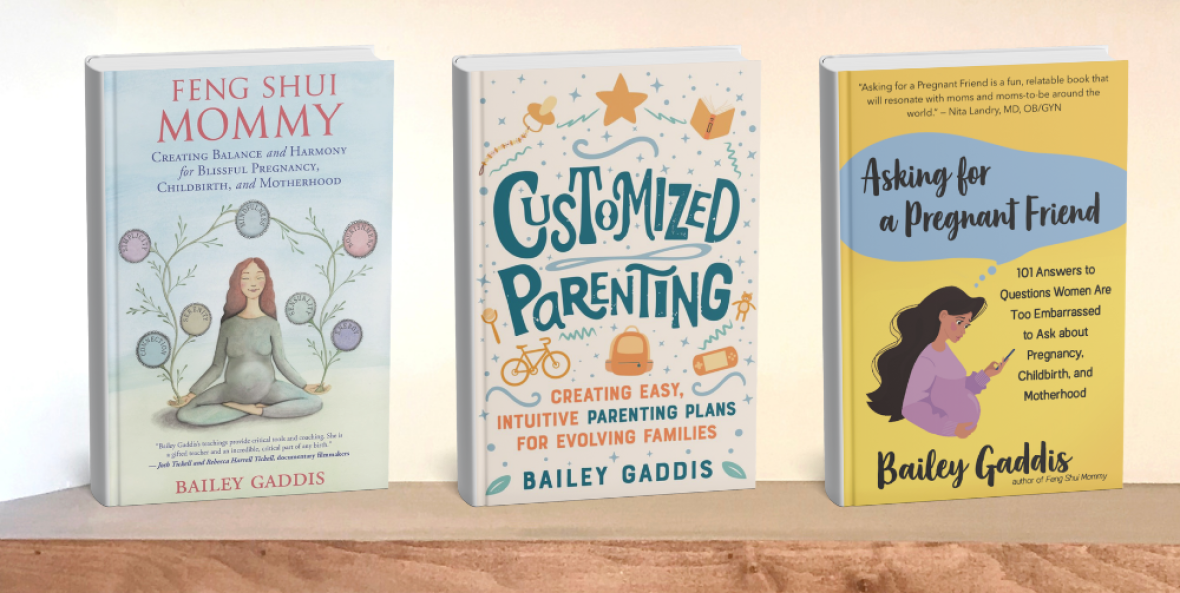
To receive more support, get your copy of Asking for a Pregnant Friend: 101 Answers to Questions Women Are Too Embarrassed to Ask about Pregnancy, Childbirth, and Motherhood


And… Feng Shui Mommy: Creating Balance and Harmony for Blissful Pregnancy, Childbirth, and Motherhood


Email me at BaileyGaddis@yahoo.com if you have any questions about pregnancy, childbirth or early motherhood that you would like answered on this podcast 🙂

birth podcast, Childbirth, Pregnancy, pregnancy podcast

Meanings Behind the Pregnant Man and Pregnant Person Emojis

https://www.podbean.com/media/share/pb-wtrs5-11c475e

An exploration of what the pregnant man and pregnant person emojis mean for pregnancy and chestfeeding inclusivity.


To receive more support, get your copy of Asking for a Pregnant Friend: 101 Answers to Questions Women Are Too Embarrassed to Ask about Pregnancy, Childbirth, and Motherhood


And… Feng Shui Mommy: Creating Balance and Harmony for Blissful Pregnancy, Childbirth, and Motherhood


Email me at BaileyGaddis@yahoo.com if you have any questions about pregnancy, childbirth or early motherhood that you would like answered on this podcast 🙂

Uncategorized

I want to have a VBAC but can’t find a care provider in my area who will attend one. What should I do?

Excerpt from Asking for a Pregnant Friend: 101 Answers to Questions Women Are Too Embarrassed to Ask about Pregnancy, Childbirth, and Motherhood

One of my past doula clients — we’ll call her Jamie — interviewed fifteen care providers in her search for one who supported VBACs. After two months of searching, she discovered there wasn’t a doctor in a fifty-mile radius of her home willing to attend a VBAC. During that time she was shamed by almost every care provider she interviewed, being told she cared more about her ego than her baby’s life, was uneducated and irresponsible, and would likely fail at having a VBAC. “I’m totally disgusted and disheartened,” she told me after one of the worst encounters. “All these doctors care about is not being sued.”

She then decided she wanted the VBAC enough to drive two hours to the nearest city to be cared for by a group of pro-VBAC midwives at a university hospital. The midwives and doctors she met with at this hospital, after confirming she was an excellent candidate for a VBAC, shared with her the latest information about how much safer VBACs were than repeat C-sections for women in Jamie’s position. Almost all the data they provided contradicted what she had been told by the “fear-based gang,” as she called the local doctors she’d met.

Jamie’s labor came on strong and fast. She made it to the hospital thirty minutes before she was fully dilated. To lower her high blood pressure, she was given a walking epidural and quickly slipped into a state of serenity — she couldn’t stop smiling and telling everyone how empowered and excited she felt. Jamie then started to push. And push. And push. After four hours of pushing the baby hadn’t come out, but Jamie and the baby were in good health. I overheard a nurse say to the midwife, “If we were at the last hospital I worked, they would have forced a C-section on her hours ago.” But that didn’t happen. They kept gently supporting Jamie, ensuring her the baby was coming, albeit slowly. And then the baby arrived, healthy and screaming.

When I talked with Jamie a few weeks after her birth, she said, “I’m really happy I had the VBAC, but I think I would still be happy if I had to have a C-section. I felt so supported, heard, and respected by everyone at that hospital that I know they would’ve recommended a C-section only if it was really needed. I felt like I could trust them, and that made me okay with the idea of a C-section.”

This is the essence of what many women are looking for when seeking a care provider for their VBAC. They’re usually not looking for someone who will go to any length to get them a VBAC. They of course want someone who understands the value of a VBAC and is willing to support it when a woman is in a safe position to have one, but above all, they want someone they trust — someone who supports them in their choices and is one of their staunchest advocates. Being cared for by someone like that often allows women to loosen their grip on the desire for birth to unfold in the exact way they’d envisioned, and instead trust that it will play out in the way it’s supposed to.

What to do

Begin the process of finding quality VBAC support by reaching out to friends in your area who’ve had a VBAC and asking for their care provider’s information. You can also go to the ICAN website (ican-online.org /education) to find the nearest chapter, which can provide quality information on VBAC policies and pro-VBAC care providers in your area.

If you live in a smaller town that doesn’t have pro-VBAC care providers, research doctors and midwives in the nearest city. You’ll probably have the best luck with those who deliver at hospitals affiliated with universities, as they often have the most up-to-date information about VBACs, the risks of repeat C-sections, and how they can best support a woman through a VBAC. Finally, create a list of care providers you would like to interview. Before you meet with each candidate, call ahead to confirm they’ll attend a VBAC, as you don’t want to waste your time.

To conduct illuminating interviews, ask the questions below. They’re intended not just to elicit information but also to provide you with the opportunity to read the care provider’s body language, tone of voice, and overall vibe as they answer your queries. These nonverbal signs might be more telling evidence of whether they’re a good fit for you than what they actually say.

  • Do you feel comfortable with VBACs? The most honest component of the care provider’s answer to this question will likely live in their initial reaction. If they immediately seem enthusiastic, that’s a good sign. If they seem ambivalent but say they “might be willing” to support you in a VBAC “if all goes well,” be wary of their timidity.
  • How many VBACs have you attended? What were the outcomes? You want the care provider to have attended many successful VBACs. If they’ve attended VBACs but most ended in C-sections, take this as a potential sign that they’re actually most comfortable with repeat C-sections.
  • What is your cesarean birth rate? You want this number to be low.
  • What is the general VBAC philosophy of the hospital I would deliver in? If for whatever reason your VBAC-supportive care provider isn’t able to attend your birth, you want the hospital you’ll be delivering in to be supportive of VBACs and to have a low C-section rate.
  • Am I a good candidate for a VBAC? I placed this question after the previous ones because it’s important to gain a sense of the care provider’s philosophy on VBACs before having them assess whether you would be a good candidate. If it seems clear they don’t fully support VBACs, this may skew their assessment of your candidacy. Legitimate reasons a woman would not be a good candidate for a VBAC are a twin pregnancy, a breech baby, placenta previa, and fetal distress. Take comfort in knowing that according to the American Pregnancy Association, 90 percent of women who have had a cesarean birth are candidates for a VBAC.
  • How confident are you that I’ll have a successful VBAC? While there’s no way for a care provider to guarantee you’ll have a VBAC, your experience will be more positive if they express confidence in your body’s ability to move through a VBAC and in their ability to ensure your safety.

By asking these questions you’re being a strong advocate for yourself and baby, while also ensuring your care provider is one of your greatest advocates.

Get your copy today.

birth podcast, Childbirth, Pregnancy, pregnancy podcast

Everything You Need to Know About Postpartum Sex

https://www.podbean.com/media/share/pb-zdx4v-11c4696

Effective tips for improving your postpartum sex life, and how to navigate changes in the vagina. 


To receive more support, get your copy of Asking for a Pregnant Friend: 101 Answers to Questions Women Are Too Embarrassed to Ask about Pregnancy, Childbirth, and Motherhood


And… Feng Shui Mommy: Creating Balance and Harmony for Blissful Pregnancy, Childbirth, and Motherhood


Email me at BaileyGaddis@yahoo.com if you have any questions about pregnancy, childbirth or early motherhood that you would like answered on this podcast 🙂

birth podcast, Childbirth, Pregnancy, pregnancy podcast

Should Men Leave Their Wives If They Let Themselves Go After Pregnancy?

https://www.podbean.com/media/share/pb-p6vzg-11c4684

An exploration of all that’s wrong with a host of The No Filter podcast saying he’d leave his wife if she “lets herself go” after pregnancy.


To receive more support, get your copy of Asking for a Pregnant Friend: 101 Answers to Questions Women Are Too Embarrassed to Ask about Pregnancy, Childbirth, and Motherhood


And… Feng Shui Mommy: Creating Balance and Harmony for Blissful Pregnancy, Childbirth, and Motherhood


Email me at BaileyGaddis@yahoo.com if you have any questions about pregnancy, childbirth or early motherhood that you would like answered on this podcast 🙂

Uncategorized

Are VBACs really as dangerous as many assume? Why are they frowned upon in so many areas?

Excerpt from Asking for a Pregnant Friend: 101 Answers to Questions Women Are Too Embarrassed to Ask about Pregnancy, Childbirth, and Motherhood

In short, no, a VBAC (vaginal birth after cesarean) isn’t nearly as dangerous as some would have you believe. If you’re having a healthy pregnancy, at least eighteen months have passed since your last C-section, you’ve never had a uterine rupture, and your baby is head down (vertex position), a VBAC is likely a safer option than a repeat cesarean.

According to a report published in the journal Obstetrics & Gynecology, a VBAC often decreases the risk of maternal mortality, the need for a hysterectomy, and complications in future pregnancies by helping women avoid major abdominal surgery, which also lowers the risk of hemorrhage and infection and shortens postpartum recovery. The American College of Obstetricians and Gynecologists also affirms that a VBAC is a safe option for many women. Despite this data, some care providers are still hesitant to support a VBAC because of concern that the mother will experience a uterine rupture. But according to the Obstetrics & Gynecology report, if you had a previous cesarean with a low transverse incision (very common), your risk of uterine rupture in a vaginal delivery is less than 1 percent. They also found that 60 to 80 percent of women who plan a VBAC do deliver their baby vaginally.

Even with solid information backing the safety of VBACs for women who are good candidates, a number of care providers and hospitals won’t support VBACs because they think the liability risk is too high. They prefer repeat C-sections because a C-section is the most invasive option and gives them the highest degree of control, and if anything goes wrong, they can say, “We did everything we could.” A survey done by the American College of Obstetricians and Gynecologists found that 30 percent of obstetricians stopped offering VBACs because of concern about liability claims or litigation. The good news is there are still plenty of care providers willing to support a VBAC, and there are plenty of ways to increase your chances of having one.

Note: Medical professionals use the term trial of labor after cesarean (TOLAC) to refer to planned VBAC labor while it’s happening. In other words, TOLAC is the labor, and VBAC is the delivery.

What to do

Before you decide to walk the VBAC path, consider whether it’s what you really want. While research supports the safety of VBAC for many women, you still need to make sure you feel comfortable having one. If you wholeheartedly want a repeat C-section, and you know that’s what would make you most comfortable, there’s nothing wrong with going that route. But if you’re even a little bit on the fence, I recommend exploring the following suggestions, as they’ll shed light on whether a VBAC is right for your unique situation:

Find a care provider who is an advocate of VBACs. Some care providers say they’ll let you “try” for a VBAC, but they’re usually more comfortable with you having another C-section. If you really want a VBAC, you don’t want that type of care provider. You want someone who has not only attended numerous successful VBACs but also wholeheartedly believes in them being the safest option for women who are good candidates. If that’s you, you want the care provider you select to be 100 percent behind your decision. You want them to be your champion and do everything possible to help you get that VBAC, while of course, keeping your safety as the number one priority.

Get a copy of the surgical reports from your C-section. These reports tell you the type of incision and repair used on your uterus, why you received a C-section, and if there were any complications. This informs your care provider if you’re a good candidate for a VBAC.

Equip yourself with knowledge. Because many people don’t have an accurate understanding of the safety of VBACs, you might encounter naysayers when you share this birth preference. First of all, you don’t have to talk about this plan with anyone but your partner and care provider. But if you do want to discuss it with others, arm yourself with the following fun facts that will help you educate the uninformed:

  • For a healthy woman having a healthy pregnancy, a VBAC is usually safer than a repeat C-section, as it decreases the risk of maternal mortality, the need for a hysterectomy, and complications in future pregnancies. It also lowers the risk of hemorrhage and infection, and shortens postpartum recovery.
  • Their risk of uterine rupture during a VBAC is less than 1 percent.
  • Sixty to 80 percent of women who plan a VBAC do end up delivering their baby vaginally.

Utilize the International Cesarean Awareness Network (ICAN). This is a nonprofit aimed at reducing preventable C-sections through education and advocacy for VBACs. Their local chapters connect you with women in your community who have had or are hoping to have VBACs, and they can help you understand the VBAC policies of hospitals in your area and share information about the care providers that support them.

In addition, if you feel you’re being forced into a cesarean, you can call the ICAN hotline at 1-800-686-4226. As they go through the menu, you’ll hear the prompt, “If you feel you are being forced into a cesarean, press 3.” When you press 3, you’ll then be asked to press 2 if you’re currently in labor. If you press 2 you’ll be transferred to an ICAN representative, who very likely has legal or medical training; they can walk you through how to advocate for yourself and prevent an unneeded repeat cesarean.

Utilize VBAC affirmations. If other people’s fears of VBACs start get- ting to you, reinforce your resolve by filling your mind with these positive messages:

  • My C-section scar heals more and more every day.
  • My C-section scar is incredibly strong and will not rupture.
  • My body will do exactly what it needs to do to have a safe vaginal birth.
  • I will have a healthy and happy VBAC.
  • I trust my decision to have a VBAC. I am doing the best thing for my baby and myself.
  • I will be lovingly supported through my VBAC.

Listen to this guided meditation. Visualize yourself moving through a positive VBAC experience by listening to the meditation at this link: yourserenelife.wordpress.com/vbac/.

Get your copy today.

birth podcast, Childbirth, Pregnancy, pregnancy podcast

How to Have an Orgasmic Birth

https://www.podbean.com/media/share/pb-vsf9g-11c4660

Effective tips for having a birth filled with passion and pleasure. 


To receive more support, get your copy of Asking for a Pregnant Friend: 101 Answers to Questions Women Are Too Embarrassed to Ask about Pregnancy, Childbirth, and Motherhood


And… 


Feng Shui Mommy: Creating Balance and Harmony for Blissful Pregnancy, Childbirth, and Motherhood


Email me at BaileyGaddis@yahoo.com if you have any questions about pregnancy, childbirth or early motherhood that you would like answered on this podcast 🙂

birth podcast, Childbirth, Pregnancy, pregnancy podcast

All Things Orgasmic Birth with Debra Pascali-Bonaro

https://www.podbean.com/media/share/pb-i4ctf-11c4640

Interview on how to have a more pleasurable birth with Debra Pascali-Bonaro, the director of Orgasmic Birth: The Best-Kept Secret, and co-author of Orgasmic Birth: Your Guide to a Safe, Satisfying, and Pleasurable Birth Experience


Learn more about her work here: https://www.debrapascalibonaro.com


To receive more support, get your copy of Asking for a Pregnant Friend: 101 Answers to Questions Women Are Too Embarrassed to Ask about Pregnancy, Childbirth, and Motherhood


And… Feng Shui Mommy: Creating Balance and Harmony for Blissful Pregnancy, Childbirth, and Motherhood


Email me at BaileyGaddis@yahoo.com if you have any questions about pregnancy, childbirth or early motherhood that you would like answered on this podcast 🙂

Uncategorized

Why to Listen to the Asking for a Pregnant Friend Podcast

https://www.podbean.com/media/share/pb-r7y7g-11c4496

Welcome to the Asking for a Pregnant Friend podcast. This podcast is based on the book by the same name and is all about diving into pregnancy, childbirth and motherhood topics our culture has made taboo. We’ll also explore topics that I, and you guys, find fascinating. With that said, this is a collaborative podcast. If you have a topic you’d like me to cover, please email me at BaileyGaddis@yahoo.com You can also learn more about me here.


Essentially, this podcast is like the modern day Dear Abbey for pregnant women and new moms, or just curious people, who want to get straight, yet loving, answers to the pregnancy, childbirth and early motherhood questions they’re too afraid to ask.


While the journey to motherhood unlocks a wonderland of joy and transformation, it also unlocks a flood of questions women often feel too embarrassed or ashamed to ask. They hold in queries and concerns about their swollen-to-capacity labia, an almost constant desire to masturbate, fears that their partner will cheat on them, strange smells coming from various orifices, being disappointed about their baby’s sex, and a litany of other question marks they stuff down, afraid they’ll be judged if the words spill out. 


So these women frantically search through pregnancy, childbirth and mothering books, and online forums, hoping they’ll find someone who has had these questions and found compassionate, accurate answers. But they don’t. They either find watered down versions of what they seek, or in the case of online forums or chat-rooms, the “shameful” question is often met with vicious judgments that make the woman feel mortified and confused. What they seek are candid answers to their questions no one wants to talk about in an uncensored way. They yearn to explore, and eventually move past, these topics in an upfront manner that’s free of judgment. 


As a childbirth preparation educator and birth doula I’ve found that once I’m able to get my clients away from the ears of their partners they spill these hidden questions. And as we work through them, I see the women lighten. They feel understood and less alone in what they perceived as their weird or shameful conundrums. 


This podcast and the book it’s based on is the culmination of all the questions I’ve heard in whispers after childbirth classes, from girlfriends who look over their shoulder at the cafe to make sure no one is listening, or from my YouTube viewers who email questions because they don’t want them seen on public comments. These women are leading a secret life in a scary pocket of their mind and want a way out. They want a way to free these hidden concerns by way of answers. 


My hope is that every time you listen to this podcast you’re relieved to find information about one of the questions you didn’t think other women had, feel more connected to the worldwide community of soon-to-be mothers and new moms, and find peace as you become informed about the aspects of your journey most shy away from.


So, why am I the one to do this podcast? As I’ve mentioned, I wrote the book on it, but more so this all stemmed from all the shame I felt during my own pregnancies. I had so many questions that I was sure made me other than. I wanted women and their partners to have a one stop shop to go deep into these topics.


In addition to personally relating to pretty much everything I talk about on this podcast I’m also deep in the fertility, pregnancy, birth and mothering world professionally. In addition to being an author of pregnancy and birth books, I’m a childbirth educator and birth doula, and own the egg donor agency Graceful Beginnings. I also write for publications like Working Mother, Fit Pregnancy, Pregnancy and Newborn, Redbook, Woman’s Day, Good Housekeeping, Scary Mommy, American Baby and other places about pregnancy and beyond. In addition, I write the website content and blogs for many of the biggest fertility clinics in the United States. So yeah, this stuff is my life.


The goal is that each week, you’re able to tune in and explore taboo topics and those that are just really wild and cool, so you can have a more enlightened, curiosity filled journey into a through motherhood. 

Thanks for joining me!

Uncategorized

What’s a cesarean birth really like?

Excerpt from Asking for a Pregnant Friend: 101 Answers to Questions Women Are Too Embarrassed to Ask about Pregnancy, Childbirth, and Motherhood

It’s intense in ways that are similar to and also completely different than a vaginal birth. Some say a C-section is the “easy way out,” but I don’t agree. While the physical sensations during the surgery are typically mild, significant mental and emotional stamina is often required. And the recovery is much more involved than what’s experienced by women who had a vaginal birth. I say all this because if you end up needing a C-section, I want you to know you haven’t “cheapened” your birth experience or failed to “prove your strength” through a vaginal birth. You’ve gone through an incredible process that requires immense courage.

Here’s what to expect from and keep in mind during a cesarean birth:

  • Scheduling: If you and your care provider decide a planned C-section is the ideal option because of a special circumstance, like your baby being in a breech position or another special circumstance, the surgery will be scheduled sometime around your due date.

  • The unplanned C-section: If you’re in the middle of having a vaginal birth, but something puts you or baby at risk, your care provider might recommend a C-section. If it’s not an emergency, ask them to thoroughly explain the reasoning behind their recommendation, so you can make a well-informed decision.

  • Consent: You have to provide legal consent before the surgery.

  • Safety: Know that the team performing your cesarean birth is composed of trained professionals who will keep you and your baby safe. Allow yourself to enter the experience with an energy of trust, as you’ll be in skilled hands.

  • Support during surgery: In nonemergency situations, your birth companion should be allowed to stay with you during the surgery. If they’re squeamish, consider asking another friend, family member, or doula (if you’ve hired one) to accompany you, as you don’t want the medical staff having to attend to anyone but you and baby.

  • Pain and numbing medication: Before surgery, an anesthesiologist reviews your medical history and pain management options. They’ll likely recommend an epidural or spinal block to numb the lower half of your body. You’ll be awake during the surgery, but you shouldn’t feel anything from your waist down, with the potential exception of some pressure. In some emergency situations — or if you have a condition that would contraindicate an epidural, like a blood clotting disorder — you may receive general anesthesia, but that’s rare.
  • Further prep: After the epidural is placed, your bladder is drained with a catheter, and an IV is started to administer fluids and any additional medication you may need. You might also receive an antacid to neutralize your stomach acid, and antibiotics to prevent infection after the procedure.

  • The screen: To prevent you from witnessing the surgery, a screen is raised at your waist. You can request that the screen be partially lowered when your baby is lifted out. (You’ll find more cesarean birth preferences in the following pages.)

  • The surgery: When the anesthesia has fully numbed you, antiseptic is applied to your lower abdomen, and the surgeon makes a small horizontal cut above your pubic bone. They then cut through the underlying tissue — manually separating your abdominal muscles — until they reach your uterus. A horizontal incision is then made in the lower portion of your uterus, and the doctor retrieves your baby and the placenta. This typically takes fifteen to twenty minutes. You might be given Pitocin after the surgery to help prevent hemorrhaging and to ensure the uterus contracts back down to its original size.

  • Bonding: If you and baby are in good health, you’ll likely be able to hold them after delivery, while you’re still lying on the operating table.

  • The stitches: As you’re falling in love with baby, the surgeon applies absorbable stitches to your uterus, and stitches or staples to your abdomen. The incision is usually so low a bikini bottom can cover the scar.

After the C-section is complete, you start the recovery process, which is different for every woman. The recovery is covered in the next question.

What to do

Create cesarean birth preferences. A common source of resistance to a C-section is lack of control, as women often feel that because the birth is literally in the hands of the surgeons, they’ll lose their sense of empowerment. But this doesn’t have to happen. In the absence of an emergency, many hospitals are open to moms having a voice in how their C-section unfolds, typically in the form of cesarean birth preferences. I find that creating these preferences — even if you feel certain you won’t need a C-section — helps dissolve fear of the unexpected because you’re preparing for all possibilities.

Some cesarean preferences that can help you reclaim feelings of control and empowerment and ensure a gentle C-section are offered below. These preferences are just samples — you should take out any that don’t feel important, and add any that do. I also recommend bringing them to a prenatal appointment about six weeks before your due date to discuss with your care provider and to find out if any of the preferences go against hospital protocol. If so, you could choose to give up some preferences, or find a hospital that supports gentle C-sections.

Sample Caesarean Preferences

We request:

  • To have my arms free during the operation. Being strapped down can induce panic. Request that your arms remain unbound so you can hold baby as soon as possible after delivery.
  • To have a nasal cannula instead of a facemask for oxygen. Oxygen facemasks make some women feel claustrophobic.
  • To have medical staff refrain from personal conversations. Hearing the nurse’s thoughts on a new dating app is unlikely to fill you with positive anticipation for meeting your baby. So request that all people in the operating room swap personal conversations with encouraging words for you — or at least limit their comments to the task at hand.
  • To have medical staff talk to me, instead of about me, as much as possible. This can help you feel like you’re part of the process, instead of “just another patient” cycling through the operating room.
  • To have music or other recording of my choice playing. The sounds you hear during the C-section can set the tone for the experience, so ask for the ability to play songs or a guided meditation of your liking. You should also be able to bring headphones if you want a private listening experience. Use the following link to download a guided meditation created for cesarean births: yourserenelife.wordpress.com/gentle -csection/.
  • To have the screen lowered as baby is lifted out. Seeing your baby’s arrival is a powerful experience, especially for moms who cannot physically feel the emergence.
  • To have delayed cord clamping. This helps reduce the chance of baby developing an iron deficiency, because it allows the iron- and hemoglobin-rich blood in the cord and placenta to get to baby before the cord is clamped and cut. The cord usually stops pulsating within a few minutes after delivery.
  • To have skin-to-skin contact directly after baby is born. The release of oxytocin that occurs when you hold your baby on your bare chest supports bonding and eventual breastfeeding (if that’s something you’re choosing to do).
  • To have monitors placed so they won’t impede bonding. Dealing with a tangle of tubes and wires when trying to hold your baby isn’t fun.
  • To have baby stay with parents at all times, unless a medical complication makes that impossible. It’s ideal for a newborn to be with one of their parents as much as possible.
  • To have a vaginal swab applied to baby (also known as “vaginal seeding”). Stay with me on this one. When a baby is born vaginally, they’re exposed to a range of microbes that help reduce the risk for inflammatory illnesses, heart disease, infections, and other not-fun circumstances. A baby born via C-section can potentially receive the benefits of these microbiomes when the care provider collects a vaginal swab and wipes it on baby’s skin. It can also be wiped on your nipples before breastfeeding. Discuss this preference with your doctor or midwife, as the research is ongoing and controversial. To learn more, check out the article “The Microbiome Seeding Debate — Let’s Frame It around Women-Centered Care” in the journal Reproductive Health.

Get your copy today.

Uncategorized

What will happen if my baby needs serious medical attention after birth?

Excerpt from Asking for a Pregnant Friend: 101 Answers to Questions Women Are Too Embarrassed to Ask about Pregnancy, Childbirth, and Motherhood

If that happens, you should continually remind yourself that it’s not your fault. For a variety of reasons completely outside our control, baby’s medical status can become fragile during pregnancy or birth. While sadness and fear will likely be woven into the experience, regret doesn’t have to be a constant in this unexpected journey. And it shouldn’t. Because in many ways, all regret does is suck you out of the present moment — and this is a present moment that requires all your energy and attention to make informed decisions and to care for your baby and yourself. Regret makes you ruminate over past circumstances that can’t be changed. And sure, when everything settles down, you can review the series of events that led you here, and see if there’s anything you’d change if you become pregnant again. But for now, give yourself permission to be kind to yourself. This also applies to your partner. It’s natural to want to blame someone when something goes wrong, but often, that only alienates your support system. Just keep choosing forgiveness and kindness — at least in your interactions with yourself and others.

Anger will almost undoubtedly be part of your early experience as well, and that’s okay. It will probably feel completely unfair that your family is having to navigate something so painful and unexpected. And it is. You deserved to give birth to a perfectly healthy baby, and it sucks that you were dealt a different hand. Let all this anger flow through and out to create space for strength. (See below for an idea of how to do that.) Because when we’re constantly trying to suppress negative emotions, it’s hard to find our way into courage and trust that we will make it through. But you will. Even though this might feel like an insurmountable situation, you will make it through.

While much of what you’ll do during this time depends on the unique circumstances of your baby’s health needs, here are some universal strategies for getting through a heath crisis with your baby:

  • Keep bringing yourself back to the present. When our child’s health is in jeopardy, the mind tends to bounce back and forth between the past and the future — thoughts of the past, filled with unproductive regrets, and thoughts of the future, soaked in worst-case scenarios. Neither serves us. The most productive place for you is the present moment, where all you need to do is process and manage what is right in front of you. When your mind starts wandering to unproductive realms, pay attention to your five senses. Notice what you can see, smell, hear, taste, and touch, and let it pull you back into the now.
  • Keep a running list of questions. When your newborn has a health condition, the questions and the storm of new information can be overwhelming. Keep track of it all by writing down your questions the moment you think of them. Then, take notes as the questions are answered. If anything is unclear, don’t be afraid to ask for clarification. Newborn Intensive Care: What Every Parent Needs to Know by Jeanette Zaichin also provides helpful insights on this topic.
  • Request thorough communication. If your baby is in the NICU, you probably won’t be able to be with them 24/7, which could make you antsy for information. Ensure that you stay informed of baby’s health status by being adamant that the health care team regularly updates you.
  • Be treated in the same facility as your baby. If your baby needs to be transferred to a new hospital and you’re still in need of postpartum care, ask if you can be transferred to the same facility.
  • Ask to be part of baby’s care. While much of the care baby needs will likely require specialized training, there will be tasks like bathing, cleaning, and of course bonding that you can participate in. Work out a schedule with the care team so you know when to be present for these activities.
  • Create a physical anchor. When we’re crippled by fear, it can feel like we’ve left our body. This can be paralyzing. When you notice you’re floating into fear, ground yourself by utilizing a physical anchor. For example, you can hug yourself, push down on your shoulders, or press your palms into your eyes. When you use your anchor of choice, couple it with an affirmation, something along the lines of “It’s safe to come back into my body.”
  • Don’t blame yourself. Every time you try to blame yourself for what’s happening, mentally step out of yourself and firmly but gently say, “STOP.” After giving that stop message, treat yourself as you would a child who is broken up over something that isn’t their fault. You wouldn’t encourage them to be harder on themselves — you would nurture and reassure them. Do that for yourself.
  • Take time every day to let out your emotions. Get into a private space for an hour (or for however long you have to be alone) every day and let yourself go. Scream, rage, cry, beat your fist on a pillow — let it out. Releasing these emotions can provide the clarity and calm to get you through the most difficult days of this journey. You can also journal during this time, letting out all the thoughts you don’t feel comfortable sharing with others.

If you find it helpful to have a sounding board, ask a friend or family member if they’d be willing to be this for you. Tell them straight up that you’re looking not for advice but for someone to be an active listener. I would stay away from asking your partner to do this, as they’re too close to the situation. While you’ll definitely be a support for one another, it’s ideal for each of you to have someone else to vent to.

  • Go for a walk. Being in a medical facility for prolonged periods can be stifling, making it hard to think clearly. Refresh your mind, body, and emotions by going outside at least once a day and walking around the block, or to a local park. Amp up the benefits of the walk by listening to soothing music or a guided meditation.
  • Nurture your basic needs. Drinking water, regularly eating nutritious food, and sleeping helps ensure that your health doesn’t sustain too much damage through this challenging time. My client Sarah had a premature baby who had to be in the NICU for four weeks. She said she felt like she had to martyr herself during that time. She said the thought “My baby is suffering, so I should suffer” constantly cycled through her mind. This resulted in her depriving herself of nourishing meals, quality sleep, and regular showers. Looking back, she regrets this attitude, saying, “By doing that I made myself so physically weak and uncomfortable, which made it harder to deal with my emotions, make decisions, and even spend time with my baby. Anytime I was with her in the NICU, I would just break down.”

While you probably won’t feel like doing anything but worry about your baby, forcing yourself to take care of those basic needs can fortify your ability to be there for them. You don’t deserve to suffer more than you already are.

  • Join a support group. Having a child with unexpected health needs can feel very isolating — like no one else could possibly relate to your pain. But seeking the camaraderie of a support group for parents navigating similar situations can help you feel less alone, and talking with other parents provides an outlet for processing what your family is going through. Members of these groups are often wonderful resources as well, providing tips on the best care providers, helpful treatments for various conditions, and how to work with your insurance provider. Your baby’s doctor can likely provide recommendations for local support groups. the March of Dimes, National Perinatal Association, and shareyourstory.org can also connect you with helpful resources. In addition, platforms like Facebook have many online support groups.

Get your copy today.

Additional Resource: BirthInjuryCenter.org/

Uncategorized

I’ve experienced sexual trauma and am terrified at the thought of giving birth vaginally. Is it horrible that I want to ask for a cesarean birth?

Excerpt from Asking for a Pregnant Friend: 101 Answers to Questions Women Are Too Embarrassed to Ask about Pregnancy, Childbirth, and Motherhood

It’s not horrible at all. You should have whatever type of birth you think you’d be most comfortable with. The combination of giving your body up to another human during pregnancy, being touched in a clinical manner in the same areas the abuse likely took place, and potentially feeling a loss of control in medical settings can equal a birth experience ripe with triggers and anxiety. It can also bring up fear of receiving treatment from a male doctor, nurse, or ultrasound tech. It’s a complex path to navigate.

Adding to this complexity is the lack of energy many women have for managing their anxiety during pregnancy and childbirth. Because the coping skills developed after surviving sexual trauma often require significant strength to implement, the energy that pregnancy and childbirth siphon away can leave a woman feeling vulnerable to triggers and all the resulting emotions and physical responses. One survivor I worked with said pregnancy made her feel like she was on an out-of-control rollercoaster of joy, fear, sadness, excitement, anxiety, and anger — until she took the steps listed below.

What to do

Take it one step at a time. Even women who haven’t experienced sexual trauma can find pregnancy and childbirth overwhelming. When you’re

managing the added weight of being a survivor, the process can feel defeating. But if you focus on one empowered action at a time, you can navigate your way to a space of calm and trust that can carry you through a positive birth experience. Here are some ideas to get you started:

Rest. This is always important, but it’s especially so when navigating the added anxiety of past sexual trauma.  

Find a care provider you trust implicitly, then share your story. After you’ve interviewed various care providers and have found one who makes you feel safe, tell them whatever aspects of your story you’re comfortable sharing. (It may take many visits before you trust them enough to share this information.) They should then offer clear ideas on how they’ll adapt their care to honor your needs. They should also be open to hearing how you want to be cared for. It’s important that this feel like a collaborative relationship, and not one where they’re the authority figure and you’re the passive recipient of what they deem “right” for your body. They should involve you in every decision, continually reassuring you that you’re in the position of control — they’re just there for guidance and to provide the support you deem necessary. If they don’t make you feel this way, I urge you to find a new care provider.

Request female care providers. If you think being touched by men will trigger you, add to your birth preferences that you would like to be cared for only by women, and discuss this preference with your primary care provider. While this might not always be possible (for example, there might only be a male anesthesiologist available if you’re getting an epidural), identifying this preference gives you a better chance of creating an environment that facilitates optimal comfort.

Ask for comprehensive communication from care providers. Survivors I’ve supported felt anxious during prenatal visits and childbirth because they never knew when they would be touched. Some were so uncomfortable with surprise touch that they dissociated from their bodies and felt unconnected to their pregnancy and birth experiences. You can prevent this by telling all your care providers (e.g., doctor or midwife, ultrasound techs, nurses, assistant midwives, etc.) that you need them to inform you before touching you, and to fully explain what they’re doing and why.

Speak up when you feel uncomfortable. Even when you make it clear you want thorough communication about required touch and you want that touch to be gentle, you might still get a care provider who isn’t respectful of your requests. If that happens, don’t be afraid to speak up, and if possible, ask for a different care provider.

You might also have the experience of someone fully honoring your needs, yet still making you feel uncomfortable. If this happens, you have every right to ask them to cease touching you until you feel comfortable resuming.

Make it clear that it’s imperative you don’t lose your voice during the birth experience. I’ve attended the births of survivors who had care providers who made them feel safe…until labor and delivery. These care providers assured the women that they wouldn’t be pressured into decisions they weren’t comfortable with and they would be treated with the same level of respect they’d received during pregnancy. But then labor began, and the promises dissolved. This resulted in the women feeling like they were no longer in control of their birth — like they were being silenced. This doesn’t have to happen to you. See “Essential Tips for the Journey” on page xx for more information on how to maintain your voice during birth.

The importance of speaking up throughout childbirth is reinforced by an article published in BMC Pregnancy Childbirth that found (not surprisingly) that the most effective guide on how to support a survivor of sexual abuse through childbirth is the birthing woman herself.

Ask yourself whether a vaginal or a cesarean birth seems more triggering. Ask your care provider or childbirth preparation educator to walk you through what you can typically expect during a vaginal and a cesarean birth. As you hear about the components of each experience, take note of what raises your red flags. For example, I worked with a survivor who didn’t like the idea of having an oxygen mask on her face during a C-section, while another was terrified of the idea of a vaginal tear. While it’s impossible to know exactly how you’ll handle a vaginal or cesarean birth, this mental mapping can help you determine what type of birth could be best for your unique needs.

Consider hiring a doula. Regardless of the type of birth you select, a doula provides an additional layer of support that can soothe many of your fears and anxieties before, during, and after birth. If you’d like a doula, do as you did with care providers and interview many candidates until you find one you trust enough to share your story with. From there, be clear about the type of support you want, and what you anticipate being difficult. For example, if you’ve selected a C-section but are nervous about feeling out of control while under the influence of opioids, brainstorm ways your doula can create a safe container for you.

Think about the birth positions that might trigger you. Certain positions can bring up memories of abuse, which is why it’s important to learn the most common birth positions, and let your care providers know if there are any you do not want to be in.

Think about phrases that might trigger you. Much like the birth positions, there might be phrases you associate with abuse. For example, if phrases like “Just relax” or “Don’t worry, it will be over soon” have negative connotations for you, tell your care providers not to use them, and add these requests to your birth preferences.

Read Penny Simkin’s book When Survivors Give Birth. This extraordinary book dives into the complexities of giving birth while managing the PTSD caused by sexual trauma.

Select a childbirth preparation class that provides tools for managing fear and anxiety. While many classes provide excellent tools for pain relief, few go deep into how to manage the fear and anxiety that can arise during the journey to and through childbirth. In my biased opinion, the HypnoBirthing and Birthing from Within modalities provide the most effective techniques for this emotional support. You can supplement these classes with my online course on Udemy, “Childbirth Preparation: A Complete Guide for Pregnant Women,” which provides over fifteen relaxation recordings and an entire section on fear release. It can be found here: http://www.udemy.com/course/ childbirth-preparation-a-complete-guide-for-pregnant-women.

Create a list of your go-to relaxation tools. If you’re triggered during birth, it will be helpful to have a list of calming techniques. To create this list, practice the techniques offered in your childbirth preparation class, and note which ones are most effective. Provide this list to your birth companions, and explain how they can lead you through the techniques.
Help your birth companions pull you out of dissociation. Dissociation — feeling disconnected from your body and the here and now — is something many survivors experience. It’s a common coping mechanism, and it could occur during birth if you’re retraumatized. However, your birth companions can pull you out of it with a few simple techniques.

First, it’s important for your birth companions to understand the signals of dissociation. For example, your eyes might “glaze over,” or you could start moving or responding in a spaced-out manner. Essentially, you start to act really different — like you’ve checked out. Discuss this with your birth companions before birth, and ask the person you feel safest with to do the following if they think you’ve dissociated:

  • Ask everyone to leave the room.
  • Hold eye contact with you. If your eyes are closed, they can snap their fingers or say your name in a strong voice. They can then instruct you to open your eyes if you don’t open them during the initial prompts.
  • Figure out a phrase you want them to use to help you acknowledge what’s happening. For example, they could say, “It seems like you went somewhere else for a while. You’re safe to come back to the room.”
  • Once you seem to be coming back into your body, they can ask you where you are and what you’re doing. They can also ask you to explain what your five senses are experiencing.
  • Finally, they can strengthen your connection to your body and the present moment by giving you an essential oil to smell, placing a cool compress on your forehead, or pressing their hands down on your shoulders.

Take heart that you could have a new relationship with your body after childbirth. While it’s not a given for all survivors, many report having a transformed relationship with their body after birthing their baby. The experience might help you to see your body in a new light (it’s a vessel for new life!) and connect with it in ways that evoke feelings of pride, gentleness, and nurturing. Birth certainly won’t erase the atrocities you experienced, but the experience can allow you to have a fresh beginning with your body.

Note: If you feel that pregnancy and preparing for childbirth could bring up intense emotions and memories, consider working with a trauma therapist.

Get your copy today.

Uncategorized

I’m paralyzed by the thought of birthing in a hospital. But I’m also uncomfortable with a home birth. What should I do?

Excerpt from Asking for a Pregnant Friend: 101 Answers to Questions Women Are Too Embarrassed to Ask about Pregnancy, Childbirth, and Motherhood

I would like to say that the answer is as simple as choosing a birth center (and it might be!). But there’s probably more to this question because it’s really about fear, and choosing a birth center won’t dissolve the underlying fears you may have. So let’s start by exploring why some women are afraid of hospital births.

For many of us, the hospital is associated with injury and illness. It’s the place you go when something is wrong and you need to be poked and prodded. That’s enough to make anyone nervous. In addition, almost every depiction most people have seen of birth was from mainstream media: panicked women being rushed into a hospital, hooked up to machines and an IV, and then screaming at their partner (comedies), or almost dying (dramas). Those are the messages our minds have received about hospital birth. For some women, these images translate into, “I have to birth in a hospital because it’s the only safe place.” For others, they trigger the fight-flight-or-freeze response, making the hospital a suboptimal place for them to birth.

And now for the fear of home birth. Going back to the messages we’ve received from mainstream media, the rare home births shown in prominent shows or movies almost always end in an emergency transfer to a hospital, and the mother regretting her decision to try a home birth. In addition, many people have the misconception that a home birth is dangerous and irresponsible. But the reality is, if a certified midwife who has confirmed you’re a good candidate for a home birth is caring for you, this environment is almost always incredibly safe. An article published in Journal of Midwifery & Women’s Health reported that planned home births for low-risk women result in low rates of interventions, without an increase in adverse outcomes for mothers and babies. The key term in that finding is low risk — if you have special circumstances that could require medical care to keep you and baby safe, a hospital birth is likely the best choice. But if you and baby are all good, a home birth is a viable option.

Taking all this into consideration, it’s easy to see why many women have a tricky time deciding where to birth. However, there is a way through.

What to do

The following exercises and considerations can help you discover what you’re actually afraid of, process the resulting information in a way that helps you make a birthing-location decision you feel good about, and acquire tools to reinforce comfort in your decision:

Break down your fears. Figuring out the makeup of our fears often makes them more manageable.

  • To do this, write Hospital and Home Birth on the top of a page.

Then, under each, write everything about that birthing environment you’re afraid of. Get specific. For example, under Hospital you might write, “The IV. The sterile smell. Infection. A mean nurse. The impersonal energy. Pressure to have invasive interventions.” For Home Birth you might list, “Not being able to get quick care if surgery is needed. The midwife not knowing What to do in an emergency situation. Having to clean up the mess. The guilt if anything goes wrong.”

  • Next, talk to a doctor you trust about your list of fears about a hospital birth. Have them give you the skinny on the object of each of your fears. For example, you can ask what’s the likelihood that it will occur, and if there’s anything you can do to prevent it.
  • Then, talk to a home birth midwife about your list of home-birthing fears.
  • After you’ve had these discussions, sit with the information as you flow through the following suggestions.

Consider a birth center delivery. After you’ve explored your fears, visit a few birth centers. In each one, tune into how the environment and care providers make you feel. Does it seem like a happy medium? Does it make you lean toward a hospital or home birth? Or are fresh fears coming up?

If big doubts still come up, the base of your fears might be more about the process of birth than the environment where you’ll be birthing. In this case, review question 44, about the fear of death during childbirth. This question breaks down the deeper fears of childbirth and provides tools for working through them. After you’ve worked these tools, you’ll likely have more clarity about the birthing environment that’s right for you.

Interview OB-GYNs and midwives. A big factor in how comfortable women are in a birth environment is how safe they feel with their care provider. So I recommend meeting a handful of OBs and midwives (both birth center and home birth midwives) to see if you find some- one who makes you feel heard and protected. This relationship will likely inform where you want to give birth.

Listen to this meditation. The meditation recording at the following link helps you process the information you’ve gathered by walking you through visualizations of what it might be like to birth in each space: yourserenelife.wordpress.com/ideal-birth-space/.

Watch reassuring birth videos. If you Google the terms “HypnoBirthing home birth videos,” “positive home birth videos,” and “Hypno- Birthing hospital birth videos,” you’ll find numerous videos showing home birth and hospital birth in a gentle, positive light. It’s easy for me to tell you how safe birth can be in both settings, but actually seeing women soundly birthing in these environments can go a long way in convincing you.

In addition, look up the video Birth as We Know It — Educational Version on YouTube, as it also shows peaceful births. (Some of the births are a bit unorthodox, but many are really powerful — there’s even an orgasmic birth!)

Know that it’s okay if you’re not totally comfortable in your birthing environment of choice. Regardless of where you choose to give birth, there will likely still be some nervousness when you’re in that space, as it’s where you’ll be going through an intense life change. If you’ve gone through all the steps above and thoughtfully chosen the birth space that feels best, these nerves likely have more to do with what will happen in that environment than the environment itself.

Avoid letting your trepidation spin into intense anxiety by continuously reminding yourself that it’s okay to feel nervous — I can almost guarantee that every birthing woman who came before you felt the same way. And remember that nervousness can absolutely live in harmony with excitement and courage.

Get your copy today.

Uncategorized

Why am I so afraid I’ll die during childbirth?

Excerpt from Asking for a Pregnant Friend: 101 Answers to Questions Women Are Too Embarrassed to Ask about Pregnancy, Childbirth, and Motherhood

You probably feel that way because a culture of fear has permeated childbirth. It bloomed when childbirth actually was a dangerous endeavor — when women weren’t able to get quality care if a special circumstance came up, when doctors didn’t know they needed to wash their hands between treating patients. Those women had good reason to fear death. But many of the risks those women faced are gone, and modern medical advances have made childbirth an incredibly safe experience. There is now effective protocol for even the most dangerous circumstances. And the great thing is, most women don’t even need to receive medical care during childbirth, they just need a trained care provider observing them in case intervention is needed.

So now that we’re covered for worst-case scenarios, we can relax into childbirth, right? We can let go of the fear of death. But that’s easier said than done. Our conscious minds can know that death is a highly unlikely outcome of childbirth, but the subconscious mind still holds onto the belief. There are a few reasons for that. Media is one of them. Think about every depiction of childbirth you’ve seen in mainstream media. I can almost guarantee those images consisted of angry women screaming in pain. Each time you saw one of these images, a seed of fear was planted.

And then there are the scary birth stories. Some women wear their traumatic birth story like a badge of honor and love to tell pregnant women, “Childbirth will be the most painful experience you’ll ever go through.” I’ve even heard some say, “It’s so painful you’ll want to die.”

In addition to these inaccurate, harmful messages, a fear of death during childbirth can be triggered by our mind trying to wrap itself around the process of a human coming out of our body. Many women in my classes have reported a fear that their body will “rip open” during childbirth, or that their heart will give out because of the strain. Even though these are not things that will happen, women still believe it on some level, despite all the evidence to the contrary. Much of this fear comes from the unknown. They’ve never had a baby, and the mind takes them to the scariest place it can imagine. Or maybe they’ve had a baby and the birth was traumatic. Even though they survived the experience, a part of them believes the second time around will be even more traumatic.

When this fear is at its most intense, it has a name: tokophobia. According to an article published in Industrial Psychiatry Journal, tokophobia — a morbid, pathological fear of childbirth — can lead to avoidance of birth and sometimes results in a woman requesting a cesarean section. The authors report a number of circumstances that could trigger tokophobia:

Hearing traumatic birth stories: This is a big one. When women we trust go on and on about traumatic birth experiences, we start to think, “If it happened to them, it could happen to me.” And sometimes, we take it to the next level, thinking, “But I probably won’t be as lucky as they were. I’ll probably be the one that dies because of those complications.” But the likelihood of that is really, really rare.

Concerns about the competency of medical professionals: Fear is an understandable byproduct of not trusting that hospital staff or midwives can keep you safe. If you’re convinced you won’t be properly cared for if you require medical intervention, it’s likely that you have experienced some form of negligence regarding medical care, or heard stories of those who have. Whatever the reasons, the “What to do” section will provide ideas for working through this.

Low self-esteem: If we don’t think highly of ourselves, it’s hard to believe our mind and body can withstand the rigors of childbirth. (But it can!) This wavering belief in our ability to birth can water those aforementioned seeds of fear.

The good news is you don’t have to just grin and bear this often-debilitating fear, regardless of where it’s coming from. There are ways to face it, then move past it.

What to do

One of the most crucial steps to overcoming this fear is realizing it’s not a sign of what’s to come. Even if your mind believes on the deepest level that your birth will not have a good outcome, it doesn’t make it so. Keep reminding yourself that the fear is a false construct of your mind, built by outdated information and stories that are part of someone else’s false constructs or need to impress. And above all, know that you can overcome the fear. Know that the fear doesn’t own you. Know that you are stronger than the fear. The following steps will help you believe that:

Find a care provider you feel safe with. Few things are as reassuring as hearing a care provider you trust tell you that they’ll keep you safe during childbirth. They can explain the protocol for all the situations you’re afraid of, and they can share uplifting stories of births they’ve attended.

The key here is that you trust them. If that trust isn’t there, their reassurance won’t mean much. So interview care providers until you find one who makes you feel safe. While it’s common to have to interview a few before finding the right one, you might also discover that you don’t trust any of them, regardless of how many candidates you interview. If this is the case, you might need to work with a mental health specialist to unpack and examine your unique trust issues with medical care providers.

Write about what you’re afraid of. An interesting thing about fear is that when we name it, it loses some of its power. So write down why you think you’ll die during childbirth. Can you pinpoint where that comes from? Are other fears about pregnancy or childbirth fueling your fear of death? Write it all, letting the words flow until you find clarity. Then, make a list of the primary fears and discuss them with your care provider and/or a mental health specialist.

Carefully select the prenatal testing you’ll undergo. The testing that can be utilized during pregnancy is a double-edged sword. On one side, the testing can offer reassurance if it confirms everything is fine. On the other side is anxiety that can be triggered while waiting for test results, in addition to the fears that arise if results are abnormal. Because of this, it’s crucial to be selective about the testing you agree to. Speak with your care provider about what is available, and what they recommend, then carefully determine what tests are ideal for your unique situation and comfort level.

Avoid scary birth stories. If someone tries to tell you their birth story, stop them and say, “I would love to hear your story if it’s not traumatic and won’t scare me. If you think it will, I would like you to wait to share until after I have my baby.” In addition, if you come across an article, television show, or other media source that portrays birth in a scary light, skip it. You don’t need to be an expert on worst care scenarios; that’s why you have a doctor or midwife.

Reach out to loved ones. The aforementioned study published in Industrial Psychiatry Journal found that there was a 50 percent reduction in elective C-sections when women experiencing severe fear of labor and delivery told trusted friends and family members how they were feeling and asked for support.

Hire a doula. Because feeling heard and supported is such a big part of unraveling your fear of death during childbirth, seeking the support of a doula can offer significant relief. To make sure you find the right person, ask friends for referrals, and keep interviewing candidates until you find the one who is a giant yes for you. You can also get a feel for how they’ll support you through your fear by bringing it up during your initial meeting. How they respond will be indicative of how they’ll support you through it during birth.

Count to ninety when you feel the fear. Any emotion takes ninety seconds to pass through you if you don’t stop it. So when you feel that fear of death gurgle up, think, “Oh, look at that. There’s that fear. I’m not going to ignore it. I’m going to sit with it.” Then set a timer for ninety seconds, and feel the fear until the timer beeps. Anytime you feel the emotions attached to the fear come back, repeat this exercise.

Create an arsenal of relaxation techniques. In addition to the ninety-second fear release, collect practices that soothe you. For example, you could take deep breaths, envisioning calm, trust, and comfort flowing in as you inhale, and fear, tension, and dread flowing out as you exhale. You could also repeat a mantra, such as, “I’m releasing this fear because it doesn’t own me. It is not real. I choose love and trust instead.” Or you can simply repeat, “I am safe.” As an added resource, download this guided meditation that was specifically crafted for releasing the fear of death during childbirth: yourserenelife.wordpress .com/fear-of-dying/.

Birth in the location that makes you feel safest. If the idea of birthing in a hospital freaks you out, consider birthing at home or in a birth center. But if you can’t imagine feeling safe anywhere but a hospital, go to the hospital. And it doesn’t matter what your partner, mom, friend, childbirth educator, or whoever thinks you should do. Do what makes you feel most secure.

Get your copy today.

Uncategorized

I’m a huge control freak and can’t stand the thought of not knowing when I’ll go into labor, what it will feel like, and how long it will take. How do I deal with all the unknowns?

Excerpt from Asking for a Pregnant Friend: 101 Answers to Questions Women Are Too Embarrassed to Ask about Pregnancy, Childbirth, and Motherhood

I’m a card-carrying member of the Control Freak Club. So not surprisingly, the unknowns of labor were one of the most difficult parts of pregnancy for me. I found it infuriating that even though millions of women have given birth, no one could tell me exactly what to expect. But alas, with the exception of women having a planned cesarean, there’s not a single lady who can know with certainty when she’ll go into labor, what it will feel like, and how long it will take.

Regarding the “When will I go into labor” component of this question, it’s important to note that due dates are far from an exact science. Only 5 percent of moms go into labor on their due date, most first-time moms don’t deliver until around ten days after their due date, and while some believe ladies who have already had babies will go into labor sooner, there’s no science to back that up. We just don’t know. While oxytocin is the hormone that stimulates contractions, what causes the release of that hormone is still a mystery. I hear you if you’re still like, “Okay, I get it. But come on, there must be something I can do to get things going?!” There’s an effective natural induction method I’ll cover below that may help you go into labor.

Now let’s look at the whole “What will it feel like?” thing. While con- tractions often feel like an intense blend of period and diarrhea cramps, I can almost guarantee the intensity is like nothing you’ve ever experienced.

And every woman experiences that intensity differently. For example, some experience it as rolling orgasms (jelly!), and others experience it as a call from the body to jump out the window. We don’t know exactly how the body and mind will process the intensity Moms who have already done the damn thing don’t even know what it will feel like with the next one, as childbirth is often different each time. But take heart, I’ll get to the part about how to prepare for this.

And finally, we have no stinking idea how many contractions we’ll have to have before that head pops out. Aargh. When it seems like you have to summon every fiber of your strength to get through each con- traction, it can feel deflating to not know how many more you’ll have to breathe through. If you ask women how long their labor took, you’ll get answers that range from a couple hours to a few days.

So yup. It can feel like a crapshoot, especially for women who (like me) use control as a security blanket. Birth throws that blanket out the window, leaving us cold and confused if we don’t know how to work through it. But luckily for us control freaks, there are ways through this fog of not-knowingness.

What to do

Well first, about that due date…

Think of your due date as a time of month, instead of one day. For example, a due date of May 15 becomes “mid-May.” This perspective shift helps release an obsession with a day that will likely come and go without a baby.

When my due date came and went, I panicked, thinking there was something wrong and that my baby wasn’t coming out because he probably definitely hated me. I was a wreck. I didn’t yet understand that due dates are far from an exact science, as fetuses grow at different rates, and the due date is predicted by adding 280 days to the first day of the woman’s last period, even though the length of women’s cycles varies. Because of this, only about 4 to 5 percent of women go into labor on their due date. So do as I didn’t, and break up with your due date, as this can dissolve the anxiety and sense of failure often attached to its passing.

Make an induction plan. If the last tip had you asking, “But won’t my care provider still be thinking about my due date?” you’re correct. Many care providers start dropping the I-word (induction) after your due date passes. If you’re not interested in induction, minimize your stress by creating a plan with your care provider, well in advance, about what you’ll do if you go past your due date. As you make the plan, stick to your guns, remembering you’re their client, not their patient. They can’t force you into a decision you’re uncomfortable with. If you feel like they’re badgering you during this conversation, consider switching care providers.

The plan many of my clients make with their care providers is to go to the hospital for nonstress tests (monitoring) if their baby hasn’t arrived by forty-one weeks. If the monitoring never shows fetal dis- tress, they keep on keeping on until baby decides to arrive.

Natural Induction Tip: If you go past your due date and feel anxious about getting things going, consider acupuncture, as it can be one of the most effective natural ways to induce. Just make sure you find an acupuncturist well trained in the art of induction, and you let your care provider know about it.

And now, here’s what to do about not knowing what birth will feel like:

Prepare. Take childbirth prep classes, practice the pain-relieving techniques you learn in those classes, read the books, and watch encouraging birth videos. Every time you put in this practice, tell yourself that what you’re doing will make the contractions more manageable — because it will. The breathing techniques, the pressure points, the tub, the essential oils, the positions — they all serve to get you through one contraction at a time. While they don’t eliminate discomfort, they will make it easier to manage.

Research epidurals. If you’re still fearful about the unknown pain after you prepare, research epidurals. That way, if that’s something you end up wanting, you’ll be confident you’re making a well-informed decision. This book provides epidural insights that can get you started.

Make peace with the unknowns. To infuse your pregnancy with more acceptance for all the unknowns, listen to this guided meditation: yourserenelife.wordpress.com/unknowns-of-childbirth/.

The main thing I want you to remember, no matter how you choose to get through the sensations of childbirth, is that you will get through them. They will not kill you, and they will absolutely help you realize your superhero strength.

To deal with the frustration of not knowing how many contractions you’ll have to get through, try these ideas:

Think of each contraction as its own event. Instead of concentrating on the unknown number of contractions you’ll have, focus only on one contraction at a time. As a new contraction begins to roll through you, tell yourself that all you have to do is get through that one con- traction. When it’s done, put your full attention on resting. Then reset, and do it again.

Remember that each contraction brings you one step closer to your baby. Even if you’ve barely dilated over a four-hour period, those con- tractions are still doing something, getting you nearer the enchanting moment of meeting your babe. So welcome each contraction, even if that sounds like crazy talk.

Don’t get too wrapped up in your cervix dilation number. While this number is a decent indicator of how far along you are, it doesn’t really help us know how much longer you have to go. For example, I once supported a mom who got to ten centimeters in three hours, then had five more hours of labor before baby was born. Another woman was at four centimeters for two days, then dilated to ten centimeters in forty-five minutes and had her baby an hour later.

Get your copy today.

Uncategorized

I know that millions of women have had babies and blah blah blah, but I keep thinking I’ll be the rare lady who can’t do it. How can I unlock my confidence and courage around my birthing abilities?

Excerpt from Asking for a Pregnant Friend: 101 Answers to Questions Women Are Too Embarrassed to Ask about Pregnancy, Childbirth, and Motherhood

I don’t think any woman — at her core — can fully fathom a baby coming out of her (unless she’s already had a baby). We can conceptualize it, but the reality of it seems unfathomable. Even when we nod in childbirth prep classes and feel we’re absorbing the information, it can feel impossible to get completely on board with the belief that a baby can exit our vagina, or that muscles and flesh can be expertly cut into so the baby can be retrieved. When we’re sitting at home — vagina, uterus, and abdominal muscles intact — it feels inconceivable that at some point the body will go through a wild transformation to allow the miracle creature within us to emerge.

The thing is, you don’t have to believe any of it is possible for it to be true. You’re off the hook for not fully buying into the fact that you can do it, because whether you believe it or not, you can do it and will do it. Whether “doing it” looks like having an unmedicated birth, Pitocin and an epidural, or a C-section matters not. All of it requires courage that will show up when the time comes.

It’s also important to remember that many other pregnant women can relate to how you’re feeling — a lot more than you realize. The very natural fears and doubts you’re experiencing are so much less isolating when you realize you’re part of a sisterhood that shares those fears and doubts. If you don’t feel chipper about the whole birthing thing, you’re not broken. You’re in good company.

However, having an enhanced belief in your ability to birth your baby can make the time between now and the moment you feel like you need to have a bowel movement but actually just need to have a baby a lot more enjoyable. So let’s get to some practical ideas for how to do that.

Try this:

Find your people. Reach out to pregnant women you know, or meet new ones by joining a prenatal exercise group or another type of gathering that attracts pregnant ladies. When you find a few candidates you connect with, invite them on a mama-date and share your feelings about birth. Many of them will likely respond with similar sentiments and support, helping you feel less alone and more understood. If they don’t, they’re not your people. But keep looking. They’re out there.

Take a childbirth prep class. Investing in this type of instruction can chip away at doubts about your birthing ability by teaching you how the body births a baby, without filling you with fear. It should also provide a bevy of techniques for pain and fear release and relaxation enhancement. Even if you don’t fully buy into the techniques, practice them, as your doubts likely come more from your deep-seated skepticism about your ability to birth than from insufficiencies in the methods. By forcing yourself to practice all of them at least once and continuing to practice the ones that resonate, you’ll build a powerful tool kit for birth. This tool kit will be utilized during birth whether you realize it or not.

As a doula, I’m often amazed to see the “tool kit techniques” that come up from the ether of my client’s subconscious during birth. I often hear, “I didn’t even decide to use that technique, it just happened.” This can occur only if your mind is filled with tools for pain relief and relaxation. Collect the tools, then trust that the ones that need to come to you will.

Treat yourself to a birth doula. Set yourself up for even more birthing confidence by hiring a doula who makes you feel safe and supported. A good doula comes equipped with in-depth knowledge of many of the tips and tricks you’re learning in your classes and books, and they can help you use the tools that will be most effective for your unique needs during each phase of labor and delivery.

If you’re concerned about cost, know that new doulas often provide their services pro bono to gain experience. You can also look into a volunteer doula program. There’s a list of organizations that connect

women with free or low-cost doula services in the “Recommended Resources” section of this book. You can also reach out to a doula in your community and ask them to refer you to a local organization, or specific doula, that provides affordable care.

Listen to this: To fortify your confidence-enhancing preparation, utilize this guided meditation, which helps you visualize yourself having a happy and healthy birth experience: yourserenelife.wordpress.com /enhancing-birth-confidence/. In addition, download this birth affirmations recording: yourserenelife.wordpress.com/feng-shui-mom my-birth-affirmations-download-link/.

Get your copy today.

Uncategorized

What if I don’t like my labor and delivery nurse? Do I just have to deal with them?

Excerpt from Asking for a Pregnant Friend: 101 Answers to Questions Women Are Too Embarrassed to Ask about Pregnancy, Childbirth, and Motherhood

Heck, no. If a nurse makes you feel uncomfortable, you get to “bye, Felicia” them. As the nurses assigned to you are the primary care providers you’ll have during birth (doctors usually just show up to help deliver the baby), you want them to make you feel safe and heard. If you cringe every time a certain nurse comes into the room, that’s a clear sign you need to request a different one. Many women don’t realize it’s even an option to ask for a different nurse, but it definitely is, and you won’t be the first person to utilize this right.

The thing is, not every nurse is a great fit for every mother. It’s not personal — it just means their vibe doesn’t jive with your vibe. If you’re wanting an unmedicated birth, for example, and you see the nurse roll their eyes when reading your birth plan, it’s clear their presence is not going to fill you with confidence or empowerment. And you deserve to feel confident and empowered. You deserve nurses who enhance your experience.

What to do

If a nurse makes you uncomfortable, think about what type of personality you would prefer. For example, do you want someone supportive of un- medicated births? Someone with a gentler energy? Someone who is direct and open with information? Someone with a good sense of humor?

Once you’ve determined what type of nurse you do want, ask your birth companion or doula to go to the nurses’ station and request to speak with the charge nurse, as they have the power to assign a new nurse. Your birth companion doesn’t have to go into detail about why you want a nurse reassigned, they can simply say something along the lines of, “My partner and I don’t feel that [insert nurse’s name here] is a good fit for us. We would prefer someone who is more [insert the traits you would like your new nurse to have].”

There’s no guarantee you’ll get the exact type of nurse you want, but chances are they’ll be a better fit than the last nurse, especially because they know you’re willing to advocate for yourself and are paying attention to how you’re treated.

While some women feel that requesting a different nurse is being dramatic, I think it’s one of the most empowered decisions you can make during birth. The people in your birthing space have a profound impact on how your birth unfolds, and you deserve to have the final say over who is and isn’t welcome. This is just another day of work for them, but it’s a monumental experience for you. You get to be as picky as you want. In addition, I wouldn’t worry about hurting anyone’s feelings — you’re not in the hospital to make friends, you’re there to have the happiest and healthiest birth experience you can.

Come prepared: Another option is to ask your care provider if they know of any nurses at the hospital where you’ll be delivering who they think would be a good fit for you. You can then ask for them by name when you check in. If those nurses aren’t available, ask if there’s a nurse who shares your general birth philosophy. For example, if you’re hoping to have an unmedicated birth, request a nurse who has had an unmedicated birth or is skilled at supporting them.

Get your copy today.

Uncategorized

Does anybody actually pay attention to birth preferences?

Excerpt from Asking for a Pregnant Friend: 101 Answers to Questions Women Are Too Embarrassed to Ask about Pregnancy, Childbirth, and Motherhood

Yes! There’s an annoying misconception that medical staff snicker behind a pregnant woman’s back if she presents birth preferences. If you’ve found a care provider you trust, they should fully respect your right to set intentions for your birth — which you can do with birth preferences. During my son’s birth, the nurses respected my preferences so thoroughly I had to ask them to ignore some of them when I changed my mind.

However, some care providers do see birth preferences as a threat to their position of power. They see it as someone trying to tell them how to do their job. But the thing is, you’re not a patient coming in for a standard procedure. You’re a healthy woman moving through a natural, biological process that requires the expert knowledge of a doctor or midwife only if a special circumstance comes up, or if you decide you want intervention. You’re not there to receive the care provider’s standard protocol. You’re there to cocreate an everyday miracle with your baby, body, care provider, and birth companions. And you deserve to be at the helm. No one else does. Your birth preferences are a way to plant a flag that says, “Unless my health, or my baby’s, becomes tenuous, this is how I want my birth to unfold. And I reserve the right to change my mind at any moment.”

What to do

Remind yourself over and over again that it’s your prerogative to take a stand regarding how you and your baby are treated during and after birth. This is a sacred experience that you get to guide. Once you’ve tapped into your confidence about your right to lead your birth experience, do the following:

  • Create your preferences. Contemplate each aspect of the birth experience (e.g., onset of labor, active labor, baby’s descent and emergence, baby’s care, and your care after birth) and write out how you’d like it all to play out. My book Feng Shui Mommy has a chapter devoted to birth preferences and includes a sample list you can find here: yourserenelife.wordpress.com/birth-preferences/. This list a good place to start if you’re feeling overwhelmed by the prospect of creating this document.
  • Phrase preferences in a positive tone. Help prevent defensiveness in your care providers by writing what you do want them to do, instead of what you don’t want them to do. For example, you could write, “I would prefer to labor without medication” instead of, “Don’t offer me medication.”
  • Keep it to one page. Your care providers are more likely to read all your preferences if you fit them all on one page.”. This often means that only the most important preferences make the list. You can always verbalize minor preferences.
  • Share preferences with your care provider. Take your preferences to a prenatal appointment at least six weeks before your due date. Have your care provider go through each preference with you. If you’ll be delivering in a hospital, ask if any of your preferences go against hospital protocol. If they do, you could decide to change the preferences, or prepare yourself and your birth companion to advocate for the preferences the hospital may push against. It’s also important to acknowledge that in the event of an emergency, you’re willing to let go of preferences that would inhibit quality care.

If your care provider seems exceedingly unsupportive of your birth preferences, consider hiring someone else.

  • Have extra copies. While the list of birth preferences you gave your care provider should make it into your chart, it may not. Ensure the list is at your birth by bringing at least two copies with you to the hospital or birthing center. And when you arrive, make sure everyone is on the same page by going over the preferences with support staff.
  • Adopt an attitude of adaptability. Remember that just because you wrote the preferences doesn’t mean you will have the exact birth they outline. The unexpected does happen, but the combination of understanding that possibility and still creating preferences sets you up for an empowered and satisfying birth experience.
  • Be thoughtful about the preferences you let go of. If someone besides you suggests pushing aside a certain preference while you’re in labor, think it over before agreeing (unless it’s an emergency situation). It can be easy to just say yes to whatever’s suggested when we’re on the wild journey of birth, but pausing, asking questions, contemplating, then making a decision that feels intuitively right for you allows you to write the story of your birth, instead of being a passive participant.

One mom I supported ended up changing her mind about almost all her birth preferences because of various circumstances that came up. But because she was the one opting to let the preferences go, instead of being forced into the decisions, she has positive memories of her birth experience. She felt confident in making the preferences, and confident in breaking them.

An article in the Journal of Perinatal Education found that a woman’s positive and negative perceptions of her birth experience are more connected to her feelings and ability to exert choice and control during birth than to the specific circumstances of the birth.

Get your copy today.

Uncategorized

What are my rights during birth? Do I have to do everything my care provider says?

Excerpt from Asking for a Pregnant Friend: 101 Answers to Questions Women Are Too Embarrassed to Ask about Pregnancy, Childbirth, and Motherhood

You have a lot of rights. Essentially, you have the last word on every facet of your care, and you don’t have to do anything your care provider suggests if you feel it’s the wrong call. But that’s where the water gets murky. Although you should be the key decision-maker during your pregnancy, childbirth, and postpartum experience, the people around you — specifically, your medical care provider — often hold ample sway in how things unfold. Intentionally or unintentionally, these people may manipulate your decisions based on legal or timing considerations, a hospital’s (possibly outdated) culture, or their personal biases. Fortunately, there are ways to get around this — the first being to know your rights. These include the following . . .

The Birthing Mother’s Bill of Rights

  • The right to receive thorough information about any intervention being recommended: You have a right to ask your care providers questions until you’re satisfied with the answers and feel you have enough information to make an informed decision. They should explain — in easily understandable terms — the risks and benefits of anything they’re recommending. You can also ask what information is evidence-based and what is just coming from their personal experience. And you can ask about the cost of everything, down to the stool sampler they’re offering you in that little white cup.

  • The right to request options: If you’re unsatisfied with a proposed course of action, you can ask for other options.

  • The right to turn down interventions: After receiving all the information, you may feel that an intervention is unnecessary. If this happens, it’s your right to turn it down. While you might not be a medical expert, you are an expert on what feels intuitively right for your body and baby. If everything in your being is screaming “No!” you get to listen.

And just because you (likely) signed a consent for care form when you were admitted doesn’t mean the care providers don’t have to obtain your permission before moving forward with any procedure.

The following are procedures that my clients are usually surprised are not obligatory:

Vaginal exams: While it can be nice to know how dilated you are, it’s not an essential part of childbirth. So you don’t have to let anyone perform a vaginal exam if they make you uncomfortable.

Heparin lock: Many hospitals strongly encourage women to accept a heparin lock — a catheter that is placed in a vein with a drop of heparin to prevent blood clotting and is then locked off — so they have an open vein should they need to hook you up to an IV. But you don’t have to agree to it.

  • The right to ask for a second opinion and/or change care providers: If you feel your care provider isn’t providing all the information or is leading you in a direction you feel uncomfortable with, ask to see another care provider. While the current care provider might push back, you’re doing nothing wrong by making this request.

  • The right to move around. If you want monitors, tubes, IVs, and so on removed so you can freely move around during labor, you can ask hospital staff to remove them. Your care provider might recommend staying connected to certain apparatuses because of medical needs, but they can’t force you to do so. You also have the right to get into the position of your choice when delivering your baby.

  • The right to privacy: No one gets to decide who is in your birthing space but you. If you want someone to leave the space, they have to comply, even if they work there. I once was a doula for a mother who felt unsafe around her OBGYN. When the baby was being delivered, she demanded that he leave and send in the on-call midwife. He was beside himself but had to do what she said.

  • The right to know who is in your birthing space. You have the right to know the identity and qualifications of any person in your birthing space.

  • The right to check out of the hospital. I’ve worked with many women who didn’t know they could check themselves out of the hospital “against medical advice.” If you don’t feel like you’re being treated well, you can leave the hospital and check into a new one. The hospital won’t make this easy, but what you’re doing isn’t illegal.

  • The right to receive records. You have the right to request copies of your medical records at any time, and to receive a comprehensive explanation of the contents.

  • The right to speak with hospital administration. If you feel your rights are being violated, you can ask to speak with a supervisor.

  • The right to be treated like the empowered, intelligent woman that you are. No one has a right to talk down to you, or make you feel like you’re not equipped to make well-informed decisions about your body and baby. If someone treats you without respect, you can turn around and demand it.

Note: Demanding your rights in some of these situations may require you to go against your care provider’s recommendations. If the doctor feels strongly enough about a recommendation, you may be required to sign a document confirming your choice to refuse care.

What to do

In addition to understanding your rights, there are numerous ways to ensure that you have care providers who not only honor your rights but encourage you to stand up for those rights. And if you end up being cared for by individuals who don’t respect your rights, despite your valiant efforts (it happens to the best of us!), here are some tools for those situations:

  • Find a care provider who believes in “patient autonomy.” See “Essential Tips for the Journey” on page xx for more information.

  • Create a thoughtful list of birth preferences. I love me some birth preferences. Not only are they a golden opportunity to pour positive intention into your birth experience, but they also allow you to clearly state how you expect to be treated. While all care providers should be well informed of your rights, your birth preferences serve as a clear reminder of what those rights are, and which ones are of particular importance to you.

  • Hire a doula. While most doulas won’t be your voice during birth, they can be the Birthing Angel on your shoulder, letting you know if someone is not honoring your rights. They can also provide ideas for how you and your birth companion can advocate for those rights.

  • Take two childbirth preparation classes. If you’re planning on giving birth in a hospital, I recommend taking both the childbirth prep class offered by the hospital and a class not affiliated with the hospital. I encourage you to take the hospital class first to gain insight into the hospital’s birth culture and what rights you might have to advocate for. This class is largely for recon, and I suggest keeping a running list of questions and concerns about information shared there.

Then, take this list to a childbirth preparation class that’s aligned with your personal birthing philosophy — for example, HypnoBirthing or Lamaze — and share it with the instructor. The instructor can likely help you determine whether there are any red flags that suggest you should find a new hospital, or provide guidance on how to navigate aspects of the hospital’s birthing culture that might go against your own. Both classes will likely help you become more informed and equipped to have an empowered birth experience.

Be clear when refusing treatment. If you ever need to go against your care provider’s recommendation, make it explicitly clear that you’re doing so. You might even need to request they provide verbal confirmation that they understand your decision.
Research the laws in your area. Because each state has their own laws when it comes to childbirth, it’s wise to email the American College of Obstetricians and Gynecologists Resource Center at resources@acog .org and ask for guidance finding the most up-to-date regulations for your state.

Fortify your courage. Advocating for your rights can be difficult, especially in the face of a strong-willed care provider adamant that you follow their lead. But you are so much stronger than you realize, and pushing yourself to call on that innate power during one of the most important experiences of your life will likely transform the experience. Listen to this guided meditation to tap into your inner power source: yourserenelife.wordpress.com/birthing-rights/.

Get your copy today.