Blog

Uncategorized

I have a loved one who had a miscarriage and seems to have a hard time being around my baby. How should I navigate this relationship?

Excerpt from Asking for a Pregnant Friend: 101 Answers to Questions Women Are Too Embarrassed to Ask about Pregnancy, Childbirth, and Motherhood

Very gently, and without your defenses up. The reaction your loved one is having has nothing to do with how they feel about you or your baby, and everything to do with their emotions about their pregnancy loss. They are probably navigating immense grief, and being around someone that has the one thing they want most can feel heartbreaking. I learned this the hard way.

One of my closest friends — we’ll call her Zoe — had a miscarriage when my son Hudson was two. Zoe and Hudson had an amazing bond that evaporated as soon as she lost her baby. She would tense when Hudson ran to her for a hug, and she avoided his requests to play. He was heartbroken, and I was irritated. “Can’t she see that she’s hurting his feelings?” I would think. I never said anything, but I’m sure I was giving off a vibe.

I didn’t get it until I went out to lunch with her one day. Every time we neared a pregnant woman or small child, Zoe would stiffen and look away. When a woman with a stroller sat near us at the restaurant, I noticed her bite her cheek, resisting tears. She was suffering. I had been so wrapped up in how Hudson was responding to her standoffishness that I hadn’t really seen her pain. From that point forward, I planned meetups that didn’t involve Hudson or the high potential of running into any of her other triggers. I would go over to her house, take her out for a drink, go to a belly dancing class, or do anything that distracted her from motherhood, even if it was only for a few hours. And you can be sure I didn’t bring up mom life when we were together.

After Zoe eventually gave birth to a healthy baby girl, she brought up her postmiscarriage reaction to children. “It killed me to not hang out with Hudson, and my sister’s kids,” she said. “But it all made me angry, and so sad I felt like I couldn’t breathe. I wasn’t angry at any of you, I was just mad at life, and my body, and how unfair everything felt. You and my sister were my safe places, but when your kids were around, being with either of you sucked.” She told me how the situation with her sister was especially complicated because all family gatherings involved her kids. “Of course I didn’t expect her to not bring her kids to, like, Easter dinner, but I kind of wish my family would’ve given me an out for some of those things. I just wanted permission to be sad, and disgruntled, and not show up for a while.”

And there it is. She wanted permission from the people who loved her to navigate the miscarriage in whatever way she needed. She didn’t want people trying to cheer her up or saying, “That will be you soon enough” when watching kids running around. She wanted people to tell her that everything she was feeling was okay, and they’d be there for her no matter how much or little she needed them. She wanted people to check in, without forcing a hangout.

While every woman handles the loss of a pregnancy in a different way, almost every woman I’ve known who has navigated miscarriage relates to this story, myself included. They want you to be there for them without unknowingly subjecting them to more pain. Sound tricky? It doesn’t have to be.

What to do

Here’s how to show up for your loved one during her journey through pain and loss, without sacrificing joy for your journey into motherhood:

Let her lead the way. The person best able to provide insight into how you can support your friend is your friend. Request one-on-one time with her, and ask how you can best support her. You can throw her a major bone by letting her know up front that you’re cool hanging without your baby and will do your best to not talk about motherhood, unless she brings it up. This will likely make her feel relieved, as she might have been nervous about making these requests. Letting her know that she can’t offend you with her requests will make her feel safe to share and spend time with you.

Give her an out. While you don’t want to withhold invitations to gatherings, it’s compassionate to let her know you totally get it if she doesn’t feel comfortable attending. This helps her feel included, without the pressure. And while it’s tempting to say something along the lines of, “You totally don’t have to come, but I really hope you do,” I would cut out the second half of that sentence. We mean well when letting someone know how much we’d love them to show up, but all it does is put social pressure on them. Instead, convey a message along the lines of, “If you want to come, please do. But I also completely understand if you don’t feel up for it. Whatever you want is the best decision.”

Regularly send a “thinking of you” text. I have a client who experienced a miscarriage, divorce, and cancer diagnosis in the same year. “I felt a big need to go within,” she said, reflecting about that year. “I told my people I needed space, and everyone listened. They listened so much that I completely stopped hearing from them. I didn’t blame them, because I had pretty much told them to do that — but it made me feel isolated. Then my cousin started sending short texts. She’d write, ‘Hey! You don’t need to respond but I just wanted to let you know I love you and am thinking of you.’ She would send some variation of that a few times a week. I usually didn’t respond, but I appreciated those notes so much. It made me feel like even though I was in a space where I needed solitude, I hadn’t been forgotten.”

You can be like this cousin, sending loving, no-strings-attached messages to let your friend know she’s not alone, even if she wants to physically be alone. If you don’t receive a response, it doesn’t mean she didn’t appreciate the thought. Don’t give up on her; just keep letting her know you care.

Tip: Add to your thoughtful texts by occasionally having your friend’s favorite treats or flowers sent to her house. You could also send a comfort box from an infant loss support program like Three Little Birds (threelittlebirdsperinatal.org) or a card from the #IHadAMiscarriage line (shop.drjessicazucker.com).


Don’t bring up your baby unless she does. Baby-brain tries to wipe the memory of everything but baby topics, which might be the last thing your friend wants to talk about. I used to prepare for meet-ups with friends I assumed didn’t want to talk baby by making a list of interests we shared. My overpreparing tendencies would then lead me to Google those topics to come up with interesting stuff to talk about. You obviously don’t have to do that, but you might prep yourself to keep anything pregnancy or parenting related from slipping out of your mouth. And of course, your friend may straight up ask you about, or bring up, baby or parenting topics — if so, share openly, while being careful not to go overboard. Pay attention to her nonverbal cues, slyly shifting the conversation if you notice she is becoming uncomfortable. While the first few conversations with her might feel forced and awkward, you’ll eventually become comfortable with the new unspoken guidelines of your relationship.


Let her know you’re comfortable hearing about what she’s going through. Sadly, some women feel like a pariah after a miscarriage. They feel like people are tiptoeing around them, trying to ignore the death-colored elephant in the room. You can minimize this discomfort and make your friend feel safe to share by asking if she wants to talk about how she’s feeling. She might not, but just knowing you’re not afraid of the topic might help her feel like she’s not an island no boat wants to stop at.

Call her baby by name. If your friend shared the name of her baby, use it when talking with her. This helps convey that you don’t think of the miscarriage as trivial, that you understand a child she was deeply connected to passed.

Don’t feel guilty for your joy. You have nothing to feel guilty about. You have every right to have a beautiful, healthy baby — and to be happy about that. While you don’t have to talk about that beautiful baby with your friend, you do get to feel shame-free gratitude for motherhood.
Get your copy today.

birth podcast, Childbirth, Pregnancy, pregnancy podcast

How To Love Your Body During Pregnancy, Or At Least Like It

https://www.podbean.com/media/share/pb-sfwfe-12b195d

Support for navigating a negative body image during pregnancy and finding acceptance and even gratitude for your changing body and appearance.


And… 

Email me at BaileyGaddis@yahoo.com if you have any questions about pregnancy, childbirth or early motherhood that you would like answered on this podcast 🙂

birth podcast, Childbirth, Pregnancy, pregnancy podcast

The Essential Guide To Pregnancy Discharge (You Didn’t Know You Wanted)

https://www.podbean.com/media/share/pb-xvigx-12b1963

Everything you need to know about the color, consistency, and odor of discharge during pregnancy, when it’s a problem, and what you can do about it.

And… 

Email me at BaileyGaddis@yahoo.com if you have any questions about pregnancy, childbirth or early motherhood that you would like answered on this podcast 🙂

Uncategorized

I know there’s a whole movement about not judging mothers, but I’m still afraid I’ll be judged. How can I feel secure in my parenting decisions and manage the judgment when it comes?

Excerpt from Asking for a Pregnant Friend: 101 Answers to Questions Women Are Too Embarrassed to Ask about Pregnancy, Childbirth, and Motherhood

There sure is a movement to stop judging mothers. And for good reason! Us poor mamas have everything from side-eye to full-on trolling thrown at us for putting even a finger out of line. But where to put “the line” is the biggest problem. What’s the definition of that line? Where the heck does it live? Each parenting camp (and there are many) will give you a different answer to those questions. And all of those camps are certain their way of parenting is The Way to parent. It’s a dangerous recipe for excessive judgment that sadly causes mothers to feel unsure and shamed about their parenting choices.

I wish I could tell you the movement to let moms be has resulted in a rosy world where all parenting trolls say, “You know what, I don’t agree with you, but that’s okay! I’m sure you have your reasons.” But it hasn’t. The judgment still exists, and not just on the internet. Family gatherings, mommy-and-me groups, preschools, parks, and all the other places where mothers and offspring congregate can be ground zero for judgment, even from people who know better and mean well. And it will probably always be that way.

So what to do? Luckily, I’ve developed this fairy dust that you blow in the face of anyone who starts judging your parenting, and they suddenly understand where you’re coming from. Or no…maybe I haven’t. But wouldn’t that be cool?

What’s actually cooler is the realization that the only person we need to convince to stop judging us is ourselves. When we figure out how to be solid in our unique parenting choices and realize it’s not the right way, or the wrong way, but our way, we’re free to stop caring (at least as much) about the judgments that come from external sources. It’s like my mom said for the entirety of my teen years and was annoyingly right about, “What other people think and say about you has nothing to do with you.” You just need to get right with you.

The main reason people judge another’s parenting decision is because that decision is different from what they’re doing, and they process it as that person implying that they’re doing it wrong. Their judgments are essentially saying, “Nah-ah, I’m not doing it wrong, you’re doing it wrong.” So ultimately, the judgment comes down to that person’s own stuff. I know this because I used to be a big-time judger. I wouldn’t do it openly; I would do it behind people’s backs like a civilized person. When I finally started looking at why I did that, I realized that every time I judged someone’s parenting choice it was because that choice ignited my own insecurity. For example, I had a friend who shared how they no longer let their toddler have screen time because he got too obsessed with it. I was so triggered by this. I immediately went to my husband and was like, “There’s no way they’re actually doing that. They have to be lying. And if they’re not lying, they’re just going to make their kid obsessed with screens when they’re older because they were deprived as a child.” My judgments completely came from the fact that I was feeling guilty about how much screen time I let our son have. But I didn’t want to give it up because it made life so much easier. I was fighting hard to feel okay about my choice, even though I didn’t. As you can see, those harsh judgments were all about me and my stuff.

What to do

Keep reminding yourself that judgments aren’t personal and that you can trust yourself — then try the following:

Above all, listen to feedback from your intuition. You already know the best way to parent your unique child, in the unique circumstances you live in. Deep down, it’s all there. But the opinions of others, books by the experts, how we were parented, and various other factors muddy the waters, making us second guess our decisions.

To step out of that muddiness and make decisions that feel intuitively right, get into a quiet space and ask yourself about the parenting decision you’ve been conflicted about. For example, “Where should my baby sleep?” When the voice of your mother or that expert or whomever starts babbling, push them away. Seek the answer that makes your insides happy. When you find the right answer for you, your stomach will unclench, your chest will feel light, and your heart will say, “Yes! That feels right!” And you don’t have to ask permission to listen to these feelings. You can just do what feels right.

And the cool thing with decisions is, you can always change them. If you decide cosleeping is right for your family, but then circumstances change and it no longer seems like the best option, you can edit what you’re doing. And while many parenting decisions might have to be made with a partner, you’ll be able to discuss the options with more clarity when you first determine what decision makes your insides happy.

Caveat: Some of your decisions will come more from that place in your brain that’s craving ease than your deep wells of wisdom — and that’s okay. We will never be perfect parents. We will sometimes be like, “Yeah, I know I shouldn’t let my kid watch so much SpongeBob, but it’s saving my sanity right now, so oh well.” We’ve all been there. Heck, I’m there while I type this.

If someone’s disapproval triggers you, explore that. When my mom gently insinuates that I might try something different with Hudson, I. Get. So. Angry. Irrationally angry. When I started looking at where that came from, I noticed that the angrier I got over a suggestion, the more my insides (those traitors!) thought she was right. She knows me so well. She knows when I’m not honoring my instincts. And I hate when she’s right, because obviously we all hate when our moms are right, right?

So if someone’s judgment really ticks you off, explore whether you’re being triggered because what they’re suggesting is what you actually feel is best deep down, or because it just doesn’t feel good to be judged. If it’s the latter, remember that their response to your choices has way more to do with them than you, and go on your merry way.

Find soothing tools for when you’re triggered. When I feel judged I immediately get defensive. I want to lash out. Sometimes I do lash out. But when I catch myself, I keep my ego from raging by saying, “I hear you, but I really have to pee. Let’s press pause on this, and I’ll be right back.” It sounds ridiculous, but it works like a charm. This protocol gives me the opportunity to be alone and get hold of my emotions. I’m able to step away from what was said and figure out if the person was being hostile, trying to be helpful, or just making an offhand comment they didn’t intend as a judgment. Usually, I’m able to come back to the conversation with some perspective and more self-control.

You certainly don’t have to use my “I gotta pee” trick, but I encourage you to make a plan for how you’ll respond when judgment causes an ego flare-up.

Feel free to not share your parenting philosophy. If you’re with someone you know won’t understand your parenting choices, you have every right to not discuss them. For example, if your judgy in-laws are constantly asking why you do this or that with your child, you don’t have to explain yourself. You can simply say, “It’s just something that works for our family. We’re not saying it’s the way everyone needs to parent, but it’s the way we’re choosing to parent.” If they harp on about what they think you should do or how kids were parented “in their day,” feel free to just smile and nod while using your brain power to figure out which Netflix show to watch tonight, or tell them your tampon is leaking and walk away.

Steer clear of toxic parenting spaces, online and IRL. Certain Facebook groups, some parenting forums, get-togethers with parents you know you aren’t aligned with . . . these are all environments where toxic judgments run amok. While of course there are exceptions, you’d be wise to avoid gatherings you believe will be saturated with strong, maybe even hurtful opinions, especially when you’re still trying to figure out how you want to mother. There’s nothing wrong with guarding your heart.

Broaden your perspective on judgment from loved ones. The potential exception to my “stay away from toxic environments” spiel is family gatherings. While certain familial situations are definitely toxic and should be avoided, there are others that are uncomfortable just because a family member is having an awkward time being involved in your child’s life.

For example, let’s say one of your child’s grandparents gets to see them only twice a year. Every time you see that grandparent, they might be full of suggestions for how to parent. You would be within your right to be incredibly irritated by this. But riddle me this — what if the unsolicited advice was the family member’s misguided way of feeling more connected to your child? What if they feel that sharing their “wisdom” is a gift that will enhance your family’s life? If you suspect this is where a judgy family member is coming from, you might help them find other ways of feeling connected — for example, taking on some feedings or diaper changes or, in the case of older kids, having a few one-on-one outings. If this doesn’t stop the “Maybe you should try. . .” comments, feel free to straight-up tell them that while you respect their insight, you’ll let them know if it’s needed.

Resist the urge to make your own judgments. While placing judgment can feel so juicy in the moment, the “high” never lasts. Moral of the story: If we don’t want others to judge us, we shouldn’t judge them. We’re all doing the best we can, and we all deserve more under- standing and “you do you” from our fellow parents.

Get your copy today.

birth podcast, Childbirth, Pregnancy, pregnancy podcast

Why Your Vagina Might Be Stinky During Pregnancy, And What To Do About It

https://www.podbean.com/media/share/pb-9f4kz-129504d

Tips for safely managing the odors of your vagina during pregnancy, and when they might be a sign of a problem.

And… 

Email me at BaileyGaddis@yahoo.com if you have any questions about pregnancy, childbirth or early motherhood that you would like answered on this podcast 🙂

Uncategorized

I get really defensive when I receive unsolicited parenting advice. It’s so bad I’ve been snapping at strangers and find it hard to be around friends and family members who have kids. How can I navigate this advice without creating tension?

Excerpt from Asking for a Pregnant Friend: 101 Answers to Questions Women Are Too Embarrassed to Ask about Pregnancy, Childbirth, and Motherhood

Unsolicited advice is composed of an interesting mix of motivations and emotions, as the advice-giver is usually trying to make themselves feel important and helpful, while the advice-receiver often feels like they’re being told they don’t know what they’re doing. For the most part, the only kind of advice that doesn’t cause tension is the solicited kind. So yup, it’s perfectly natural for your hackles to rise when someone starts preaching

about sleep training, insists you’ll kill the planet if you use disposable diapers, or shares some other opinion that primarily serves to pump up their ego. And while you have every right to be annoyed or defensive, remember that you and the advice-giver likely have two completely different perceptions of the conversation. They think the two of you are bonding over their knowledge and helpfulness, while you feel like they’re judging your parenting and putting their opinions where they don’t belong. Keeping that in mind can significantly reduce your defensiveness.

Something else that could be happening is that you’re feeling insecure about your parenting knowledge and choices, and need space to figure out what feels best for you. People telling you what you should do can make you feel rushed to make decisions and even more insecure about your base of knowledge. If you’re feeling this way, I encourage you to remember that you’re the expert on your child. You’re the guru of your family, even if you haven’t consumed as much parenting literature as the other person or haven’t found all the answers. (And spoiler alert: no one ever finds all the answers.) So instead of letting the advice get to you, take it as a sign that it might feel good to take some alone time to meditate on what’s going on with your baby, yourself, or your family and what solution intuitively feels right. If you don’t know where to start, use that alone time to research the issue and make a list of potential solutions that resonate with you.

It’s also common to feel the urge to tell the advice-giver why certain advice wouldn’t work for your family and, in the case of something like corporal punishment, why you think it’s wrong. But the fact is, they don’t want to hear it, and you don’t want to waste your breath. You don’t have to convince them their advice is misguided, or the way you’re doing something is working fine, or you’re confident you can come up with a solution on your own. You don’t owe them any explanation, and you don’t have to get sucked into a parenting debate — save your energy for something enjoyable. Here are some tips for slipping away from advice sessions with minimal effort and emotion.

What to do

Scream “No!” when someone tries to give you advice. Just kidding. Try this:

Keep parenting challenges to yourself when you’re with chronic advice-givers. Minimize the chance of receiving advice that might activate your defensiveness and anger by dodging parenting conversations with people prone to offering advice.

Compose go-to responses. When most people give advice, the response they want is an unsarcastic version of, “Oh my gosh, thank you! I never would have thought of that. You’re a genius! What would I do without your superior insights?” But you don’t have to give them that. You get to think of a response that allows you to shut down the outpouring of advice without getting into an argument. I usually say something like, “Hmm. That’s interesting. I’ll think about it.” If they continue with the advice, I’ll interrupt with an, “I’m so sorry but I think my baby just pooped. I’ll be right back.” And then I’m not right back.

Here are additional responses you can tinker with:

  • “[Insert the parenting choice here] is working just fine for us. No need to fix what isn’t broken.”
  • “It sounds like that worked great for your family. I love how there’s so many unique ways to raise a child, and that every family gets to make their own decisions.”
  • “I’m sure that’s an ideal option for some families. We’re going to keep doing what feels right for us.”
  • “We tried that, but it didn’t work for us. Just shows that each child is different!”
  • “I’m doing what the pediatrician advised.” And it doesn’t matter if this is a lie — it will likely shut down the advice or judgment, as people are often loath to go against the word of an expert.
  • “Luckily, we don’t have to agree on the right way to [insert parenting topic here]. We can each do it our own way.”
  • “Thanks for your concern.”
  • “I’ll keep that in mind. Anyways, tell me about that book club you joined.”

Check in with yourself after receiving advice. After you’ve gotten out of an unwanted-advice conversation, take a pause and look objectively at the advice. Do you instinctually know it won’t work for your family? Does it go against your parenting philosophy? If so, fuggedaboutit. But if the advice sparked some interest, file it away for later use.

Remember that the advice-giver is (probably) coming from a good place. Most people aren’t trying to insult or annoy when they give advice — usually, they’re genuinely trying to help. Hold on to this belief when they blast you with their counsel. While you don’t have to agree, or even listen to it, remembering that they’re probably not intending to insult you can help you stay calm enough to gently extract yourself from the conversation, instead of raging.

Avoid being the advice-giver. I like to preach about how annoying unsolicited advice is, but I myself give it all the time. And I’m working on this. Be better than me and swallow your advice when it tiptoes to the tip of your tongue. I can almost guarantee that people would prefer your empathy or your questions about what they think they should do over your wisdom (as wise as it might be). And of course, if they ask for your opinion, you can let it rip.

Get your copy today.

birth podcast, Childbirth, Pregnancy, pregnancy podcast

Getting Over Blocks About Sex During Pregnancy

https://www.podbean.com/media/share/pb-h7dar-129504a

Tips for getting more comfortable having sex during pregnancy, and maybe even turning it into the best sex of your life.

And… 

Email me at BaileyGaddis@yahoo.com if you have any questions about pregnancy, childbirth or early motherhood that you would like answered on this podcast 🙂

birth podcast, Childbirth, Pregnancy, pregnancy podcast

Everything You Need to Know About Masturbating During Pregnancy

https://www.podbean.com/media/share/pb-x8vqr-1295046

Discover why you might be almost constantly aroused during pregnancy, and if it’s safe to masturbate.

And… 

Email me at BaileyGaddis@yahoo.com if you have any questions about pregnancy, childbirth or early motherhood that you would like answered on this podcast 🙂

Uncategorized

I don’t feel connected to my baby. I don’t even like to look at them. Am I a monster?

Excerpt from Asking for a Pregnant Friend: 101 Answers to Questions Women Are Too Embarrassed to Ask about Pregnancy, Childbirth, and Motherhood

You’re not a monster. Not even a little bit. You’re one of the many women facing postpartum blues or postpartum depression. According to a study published in Morbidity and Mortality Weekly Report, one in nine women experience symptoms of postpartum depression. But some believe the number is actually much higher, as many mothers don’t feel comfortable talking about their depressive symptoms.

While it’s easy to convince yourself that the lack of connection with your baby is a sign you’re lacking some essential “good mother” chip, it probably just means that wonky hormones, plus the ingredients of exhaustion and extreme change, are impacting your ability to bond. However, just because the causes of what you’re experiencing aren’t dark and sinister doesn’t mean you’re not feeling like this is the end of the world. Many of us are given the consistent message — especially during pregnancy — that the bond between a mother and child is unbreakable. That it’s the greatest love story we’ll ever experience. When that’s not our reality, it can feel life shattering.

Something important to remember as you navigate this likely heartbreaking experience is that it’s temporary. While any form of anxiety or depression can easily trick us into thinking we’ll never feel better, that’s rarely the case.

If you’re sad and unable to develop a bond in the two weeks following baby’s birth, you might be facing the common phenomenon of postpartum blues, which is believed to be caused by a combination of your hormone levels plunging and a struggle to adapt to the abrupt changes of motherhood. If the feelings of sadness and disconnection don’t lift after two weeks, you might be experiencing postpartum depression.

It’s also important to realize that you’re not scarring your child, or your future bond with them, by not feeling connected now. The mother-child bond develops over a lifetime, and it will happen for you, even if you first have to navigate medical and emotional support. And it’s wise to seek that support. Sadly, about 60 percent of women with symptoms of depression do not receive a clinical diagnosis, and 50 percent of women with a diagnosis do not receive treatment. As added incentive to seek support, consider this: studies have shown that while postpartum depression can have short-term impacts on infants, there are rarely long-term emotional effects if the mother receives treatment early-on.

What to do

Get help, as you should not have to navigate this pain alone. While I totally get the resistance to being open about your depression (I waited two years before I asked for help!), I can almost guarantee that your care provider won’t judge you. They’ll probably be relieved you were brave enough to speak up. And I want to remind you again that postpartum blues or depression is not a fatal character flaw, it’s a very common by-product of going through the intense physical and mental shifts of pregnancy, childbirth, and early motherhood. It doesn’t mean you’re a bad mother, or that you’ll never bond with your baby. Asking for help is actually one of the best things you can do for your baby.

Here are a few support-steps you’ll likely need to take:

See your primary care provider. The first stop on the path to moving past postpartum blues or depression is your care provider. They can help evaluate what’s going on and refer you to a mental health specialist. They might also prescribe medication, like an antidepressant. For many women, medication is a key player in getting out of the grips of postpartum depression.

Be consistent with counseling. After you find a mental health specialist you resonate with, commit to showing up. When I was depressed, I cancelled on my therapist all the time because I felt too listless to leave the house. Needless to say, I didn’t get much out of the relationship. Years later I faced another bout of depression and forced myself to see my therapist once a week. If I couldn’t get out of bed, I would FaceTime her. I always felt lighter after our sessions and gleaned serious benefits from our time together — and I also needed medication.

As hard as it can be to keep showing up for counseling, it’s one of the most potent ways you can nurture yourself through depression. Even if some days you’re sure you have nothing to say to your therapist, you’ll benefit from simply arriving at the appointment.


Find quality care for baby. As you navigate this challenging time, it will be essential to ask trusted loved ones for help with your baby. Being their sole caregiver while trying to get through depression might feel impossible, which is why calling in reinforcements can ensure that you and baby get the care you deserve.

You might resist this because you don’t want to tell people about your depression. This is normal, but you’ll probably be amazed by how supportive friends and family are when you trust them with your vulnerability. (And you might also be surprised to learn that some of your loved ones have been through the same thing.)


Continue to spend time with baby. While being with your baby might be a painful reminder of how disconnected you feel, it’s important to continue being with them, even if you have to fake affection. Because “faking it ‘til you make it” might just help you develop an authentic bond with baby, and it will definitely support them in feeling bonded to you. If you don’t trust yourself to adequately care for your baby on your own, ask an adult to be with you when you’re spending time together.

Get your copy today.

birth podcast, Childbirth, Pregnancy, pregnancy podcast

What To Do About a Swollen Vulva During Pregnancy

https://www.podbean.com/media/share/pb-riyd9-129503e

Insight into why the vulva might become swollen and discolored during pregnancy, when it’s a sign of a problem, and what to do about it.

To receive more support, get your copy of Asking for a Pregnant Friend: 101 Answers to Questions Women Are Too Embarrassed to Ask about Pregnancy, Childbirth, and Motherhood

And… 

Feng Shui Mommy: Creating Balance and Harmony for Blissful Pregnancy, Childbirth, and Motherhood

Email me at BaileyGaddis@yahoo.com if you have any questions about pregnancy, childbirth or early motherhood that you would like answered on this podcast 🙂

birth podcast, Childbirth, Pregnancy, pregnancy podcast

Why Your Vagina Might Smell Weird During Pregnancy

https://www.podbean.com/media/share/pb-wuehs-127cd7f

Discover why your vagina might smell weird during pregnancy, what to do about the smell, and when it might be a sign of a problem. 


To receive more support, get your copy of Asking for a Pregnant Friend: 101 Answers to Questions Women Are Too Embarrassed to Ask about Pregnancy, Childbirth, and Motherhood


And… 


Feng Shui Mommy: Creating Balance and Harmony for Blissful Pregnancy, Childbirth, and Motherhood


Email me at BaileyGaddis@yahoo.com if you have any questions about pregnancy, childbirth or early motherhood that you would like answered on this podcast 🙂

Uncategorized

I find it really boring to take care of a baby all day. Does that make me a bad mom? Is there a way to make it more entertaining?

Excerpt from Asking for a Pregnant Friend: 101 Answers to Questions Women Are Too Embarrassed to Ask about Pregnancy, Childbirth, and Motherhood

Girl, I feel you. When Hudson was a baby I felt like I was on a hamster wheel of feeding, butt cleaning, spit-up dodging, cooking, not showering, and walking around in circles saying, “Shh.” I felt like my life had been drained of creative, thought-provoking stimulation. I was mega-bored hanging with a person who didn’t talk and cared only about my boobs. And I was pretty sure I was missing crucial mothering pieces.

It’s no wonder we feel like there’s something wrong with our boredom when we’re constantly told how magical it should be to interact, bond, and help baby learn about the world. These are all essential tasks that plant seeds for the emergence of independent, vibrant humans. So shouldn’t we feel inspired and excited by them? I suppose some women are, but I wasn’t.

If you relate, let me start by saying how super-duper normal you are for feeling this way. You’re not an evil Grinch incapable of connecting with your child. You’re an adult who craves activities that challenge your mind and awaken your creativity. At first glance, caring for a baby does none of these things, and often it just makes us feel incompetent and frustrated. But when we dive deeper into the nuances of baby care, there is something to be done about baby-care boredom.

What to do

Toy around with these ideas:

Incorporate your interests into baby care. For example, it’s important to talk to baby so they’re exposed to language, but who said you have to talk to them about mundane topics or read to them from cardboard books? Give your babe language exposure by reading aloud from a magazine or that book you’ve wanted to read. And music — scrap the Mozart (unless that’s your jam!), strap baby to your chest, and get a workout by shaking your butt to nineties hip-hop while making funny faces at baby.

Think of innovative ways to make baby tasks more interesting. Do this by listing your daily baby-care activities on one side of a sheet of paper and writing your interests and talents on the other half. Then, start brainstorming how you can fuse the lists, mixing and matching your interests and talents with baby-care obligations.

For me, diaper changes became more compelling when I used the time to challenge my writer’s brain to come up with new lyrics to favorite songs. Breastfeeding was made way less boring by putting a TV tray and my laptop by my nursing chair and writing weird poetry while Hudson ate. And I made sure I still interacted with him by asking questions about how I should get around tricky prose.

Remember that you don’t have to parent the way others do. Bringing your unique self into motherhood is one of the best ways you can quell boredom and foster an authentic bond with your baby — it will help them get to know the real you. And if your way doesn’t look anything like the way of your sister or the ladies in your mom group, that’s okay. We all get to forge our own path.

While life with baby will eventually become less boring, regardless of what you do, liven up your mama-baby relationship now by injecting motherhood with the stuff that makes your mind do a happy dance.

Get your copy today.

birth podcast, Childbirth, Pregnancy, pregnancy podcast

Essential Prenatal Sex Tips

https://www.podbean.com/media/share/pb-7anwq-127cd7a

Learn how to feel more comfortable when having sex during pregnancy, and how to make it more pleasurable. 


To receive more support, get your copy of Asking for a Pregnant Friend: 101 Answers to Questions Women Are Too Embarrassed to Ask about Pregnancy, Childbirth, and Motherhood


And… 


Feng Shui Mommy: Creating Balance and Harmony for Blissful Pregnancy, Childbirth, and Motherhood


Email me at BaileyGaddis@yahoo.com if you have any questions about pregnancy, childbirth or early motherhood that you would like answered on this podcast 🙂

birth podcast, Childbirth, Pregnancy, pregnancy podcast

What To Do About a Swollen Vulva During Pregnancy

https://www.podbean.com/media/share/pb-mcjpy-127cd70

How to deal with swelling, varicose veins, and discoloration in the vulva during pregnancy. 


To receive more support, get your copy of Asking for a Pregnant Friend: 101 Answers to Questions Women Are Too Embarrassed to Ask about Pregnancy, Childbirth, and Motherhood


And… 


Feng Shui Mommy: Creating Balance and Harmony for Blissful Pregnancy, Childbirth, and Motherhood


Email me at BaileyGaddis@yahoo.com if you have any questions about pregnancy, childbirth or early motherhood that you would like answered on this podcast 🙂

Uncategorized

I resent my baby for getting all the attention, and I feel invisible. How can I start feeling like I matter?

Excerpt from Asking for a Pregnant Friend: 101 Answers to Questions Women Are Too Embarrassed to Ask about Pregnancy, Childbirth, and Motherhood

Isn’t it a wild emotional shift to go from getting ample help and compliments when the baby is inside you, to suddenly being seen as their leaky accessory after going through all the work of getting them out? And sure, there are folks who ask about the birth and tell you how great you look (bless them), but really, most people are all about the baby. This can be nice at times, as you may score much-needed down time while others coo and ooh over the baby, but then there are the times when you crave to be seen as more than a mother — as more than the lady carrying around that adorable creation everyone wants to hold. You crave conversation about that book you’re writing, or that cat-grooming workshop you went to… or whatever your thing is. You want to be honored for being the power-house who grew and birthed a baby while also having all of these other amazing qualities. You’re not selfish for feeling this way.

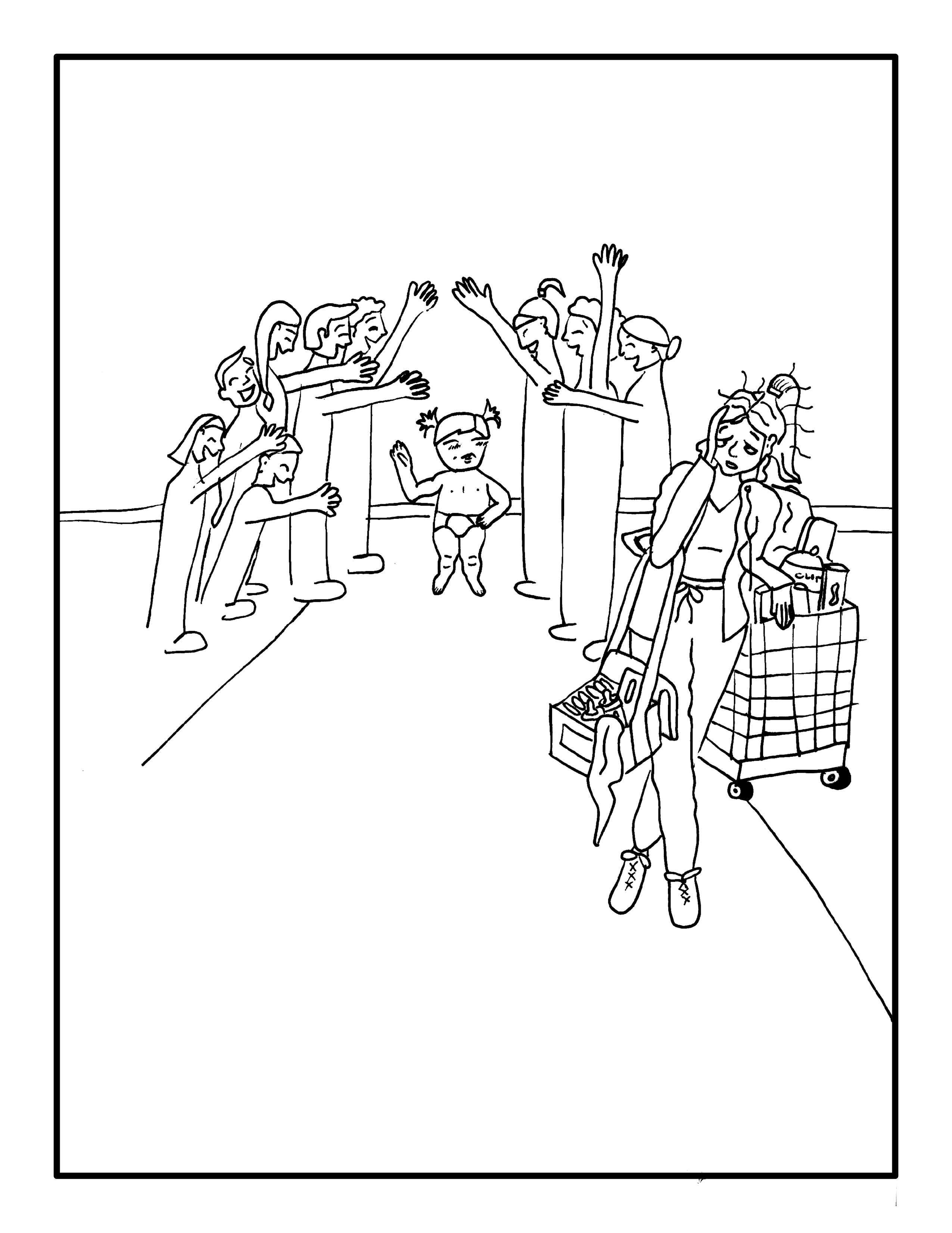
For the first six months of Hudson’s life I felt completely invisible. When people came up to us, their eyes would immediately lock onto him. If they engaged me in conversation, their eyes would stay on him, and the topic would almost always be his eating, pooping, or weight-gaining habits. I felt like I was his personal assistant. Or PR rep.

A big part of my frustration was that these interactions were a physical manifestation of what was going on in my own head. Almost every thought I had, every action I took, involved Hudson. I could barely remember what made me an individual. While I loved him deeply, I also felt twinges of resentment that he had robbed me of my individuality. Luckily, these feelings began to fade as he grew and became less dependent on me. And of course, because motherhood is crazy like this, him needing me less made me have moments where I missed him needing me all the time. Geesh.

What to do

Remember that in the early days of motherhood it’s so normal for your life and identity to feel fully wrapped up in baby. However, you can create a lifeline to your unique self by making a list:

1. Create a list of all the things that make you feel like you. This list can contain anything, from something as simple as taking a shower or organizing the closet to tasks as complex as creating a graphic novel or starting that business you’ve been dreaming of.

2. Put the items on the list into three categories. The first category will contain the actions that are absolute essentials and should be prioritized immediately (for example, taking a shower every day, and going on a walk three times a week). These are the things you’ll bring to your support system and say, “Let’s figure out who can watch baby during these times so I can do these things.”

The second category will consist of actions that are incredibly important to you but can be put on hold for six months, as month six is often when baby is a tad less dependent and able to be with others for longer periods. My top two items in this category were meditating for fifteen minutes and writing for one hour, every day.

Finally, move the remaining actions on your list into category three, which consists of the things that will come back into your life after baby’s first birthday. By this time, you’ll likely be in your groove with motherhood, sleeping fairly regularly, and feeling comfortable setting up consistent childcare. This is around the time I started teaching HypnoBirthing classes and amped up my writing career.


3. Use the list. Pull out your categorized list whenever you’re forgetting who you are or wondering if you’ll ever get back to that person. After a day of feeling invisible, this list helps you breathe and remember that there will come a time when life settles back into a more balanced rhythm. And no, life will never go back to feeling exactly like it did before baby was born, but it will start being more layered and consisting of people seeing you as a unique woman, not just the person that baby is clinging to. Things will get better.

Get your copy today.

birth podcast, Childbirth, Pregnancy, pregnancy podcast

Will You Be a Bad Mom If You Think Kids Are Irritating?

https://www.podbean.com/media/share/pb-uf577-1267e5a

Learn more about what it means if you don’t really like kids but you’re pregnant or interested in getting pregnant.


To receive more support, get your copy of Asking for a Pregnant Friend: 101 Answers to Questions Women Are Too Embarrassed to Ask about Pregnancy, Childbirth, and Motherhood


And… 


Feng Shui Mommy: Creating Balance and Harmony for Blissful Pregnancy, Childbirth, and Motherhood


Email me at BaileyGaddis@yahoo.com if you have any questions about pregnancy, childbirth or early motherhood that you would like answered on this podcast 🙂

birth podcast, Childbirth, Pregnancy, pregnancy podcast

What To Do If You Feel Guilty That You Considered Abortion

https://www.podbean.com/media/share/pb-2avr5-1267e57

Support for releasing guilt over initially considering terminating the pregnancy you now feel is right for your life.


To receive more support, get your copy of Asking for a Pregnant Friend: 101 Answers to Questions Women Are Too Embarrassed to Ask about Pregnancy, Childbirth, and Motherhood


And… 


Feng Shui Mommy: Creating Balance and Harmony for Blissful Pregnancy, Childbirth, and Motherhood


Email me at BaileyGaddis@yahoo.com if you have any questions about pregnancy, childbirth or early motherhood that you would like answered on this podcast 🙂

Uncategorized

My partner is showing signs they’re going to leave. Should I address these concerns, or try to ignore it? Can I do this alone if they do leave?

Excerpt from Asking for a Pregnant Friend: 101 Answers to Questions Women Are Too Embarrassed to Ask about Pregnancy, Childbirth, and Motherhood

I first want to acknowledge that regardless of whether or not your partner actually leaves, the fact that you’re feeling this way must be so hard. Parenting a newborn is stressful enough when all is well between the parents, but when you’re worried about your baby-raising partner skipping town, you’re forced to grapple with a mess of emotions no new mother should have to deal with. For example, you might feel scared, angry, sad, and a range of other emotions that could come with the major uncertainty you’re facing. Some might tell you to “just try to be strong, push the concerns aside, and power forward,” but I think bottling these emotions and ignoring your concerns just delays resolution. One of the strongest things you can do is feel the emotions and express those concerns. And don’t worry about trying to be strong, because you already are — your strength is a bright light at your core that can never be extinguished, no matter who enters or exits your life.

Regarding the path of parenting alone, you can absolutely walk it if you must. While it might feel like your world would end if your partner left, it wouldn’t break you. You are just as capable as the millions of single mothers out there, and you would find your footing even if it feels like the hardest thing you could ever do. I’m hands-down more impressed with the single mothers of the world than the Olympians, Academy Award winners, and Nobel Laureates, because these women are constantly summoning their courage, resilience, and dedication. They don’t get to clock out or take a sabbatical. They’re all-in, all the time. That might sound overwhelming, but you can do it if that’s how life unfolds.

What to do

Take small steps to figure out what’s going on, and build up your confidence and autonomy, which will be valuable even if your partner stays. Here are some ideas to get you started:

Address your fear. Instead of stewing in fear over whether your partner is planning to leave, tell them what you’re thinking. You’ll likely be met with one of two reactions. One: they’re shocked you’ve been thinking that and make moves to help you feel better. Two: they squirm because you’ve hit on something they’ve been considering. Either way, you’ve stepped out of the unknown and got the conversation started.

If they’re not planning on leaving but something about them is still making you uneasy, you can begin addressing their behavior and what you’d like them to change. If they are thinking of leaving, you can dive into why they’re feeling that way, if it’s something that can be resolved, and if you even want to resolve it.

As tempting as it can be to live in limbo, asking the question that’s probably been driving you crazy can untangle those knots in your stomach and give you something real to work with.

Consider whether you want them to stay. It might seem unfathomable that life could be better without your partner, but it’s worth considering. Once you move aside from the very natural fear of being alone, how do you feel about your relationship? Does your partner nurture your emotional, mental, and physical well-being? Or do they threaten or ignore it? Do you feel safe and cared-for when they’re with you? Or tense? Are you relieved when they’re out of the house for a few hours? Continue exploring your interpretations of the relation- ship until you get a hold on how you really feel about it. This deeper understanding can guide your feelings and actions moving forward.

Seek counseling. If you determine that you’re dedicated to keeping your partner in your life, and they’re willing to put in the work to mend the relationship, discuss the possibility of seeing a couple’s counselor. This objective support can give both of you an outlet for your emotions and healing strategies tailored to your unique situation. While some associate counseling with high costs, many mental health specialists accept insurance or provide pro bono services through family support centers.

Make a loose plan for what you’ll do if they leave. Many major changes seem insurmountable until we break them down into smaller steps. So to help yourself realize that you will make it through if your partner leaves, make a list of all the challenges that will erupt after they leave. For example, “Less income to pay rent. No one but me to watch the baby. A fear of being the only adult in the house at night. A loss of companionship.” Then start listing potential solutions to the changes. For example, “Find a new living situation. Ask friends and family members for help with childcare. Install a security system to enhance my sense of safety, or ask a family member to move in. Re- connect with my friends.” While this list won’t magically dissolve your challenges, it will at least show you that there’s a way forward.

Shift your focus to yourself. When we believe that much of our safety and happiness is based on our romantic partner, it’s easy to be terrified of the idea of them leaving. It can be crazy making to put so much stock in the actions of a person you can’t control.

Take back your sense of power and calm by shifting your focus from making sure your partner will stay to nurturing yourself — committing to actions that make you feel more whole and capable of caring for yourself and baby. Understandably, this is much easier when not navigating the fatigue, hormonal upheaval, and uncertainty of life with a newborn. But taking small actions like going on a morning walk with baby, drinking more water, making a list of career goals you’d like to pursue when you’ve gotten through the haze of early motherhood, calling a friend or family member who lifts you up, and doing anything else that makes you feel good, and isn’t based on your partner’s actions, can make a powerful difference.

The key to getting these small actions to actually help is that you’re doing them to support yourself, not to change into a person you think your partner will be more likely to stay with. Do it for you, the person you’ll always be in a relationship with.

Get your copy today.